
Announcements

Department of Aerospace Science and Technology of NKUA: Modern instrumentation for remote sensing of the atmosphere

Department of Aerospace Science and Technology of NKUA: Modern instrumentation for remote sensing of the atmosphere

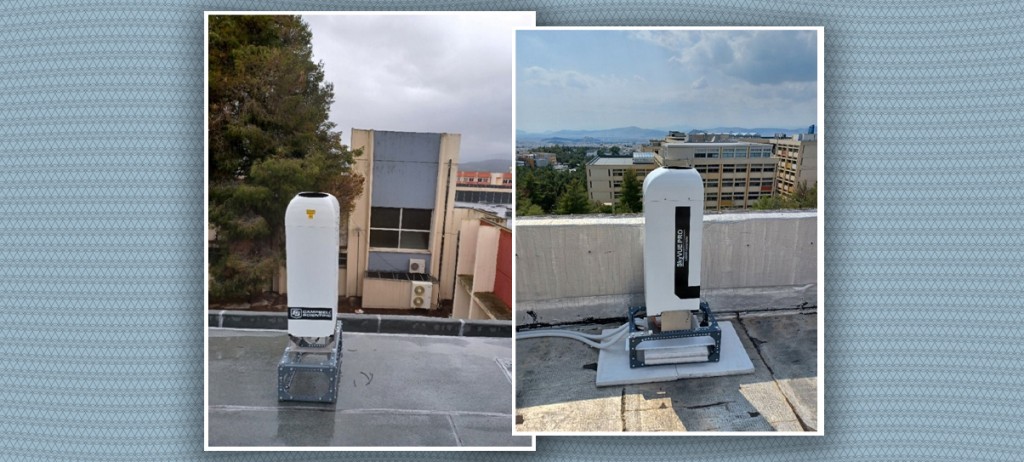
The Department of Aerospace Science and Technology of NKUA recently installed two ceilometers (model: Cambell CS135 Lidar ceilometer) in two different locations (Psachna, Euboea and in the Physics Depratments, Athens). The first instrument is already fully operational in the Laboratory of Satellite Remote Sensing and Image Processing of the Department of Aerospace Science and Technology under the supervision of Assistant Professor Mr. Stavros Kolios with the first research results to be published at International Scientific Conferences. The second one is expected to be put into operational use in the coming months at the Physics Department of EKPA in close cooperation with Professor Konstantinos Kartalis of the Physics Department.
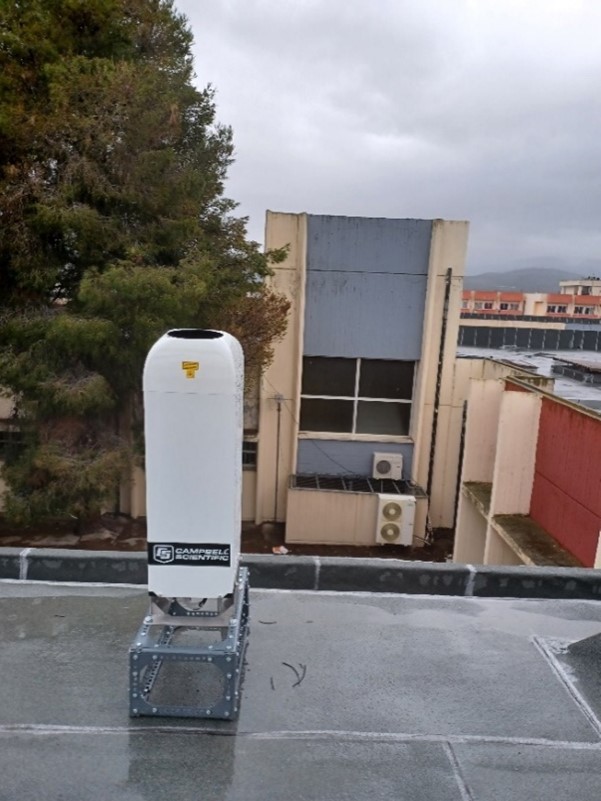
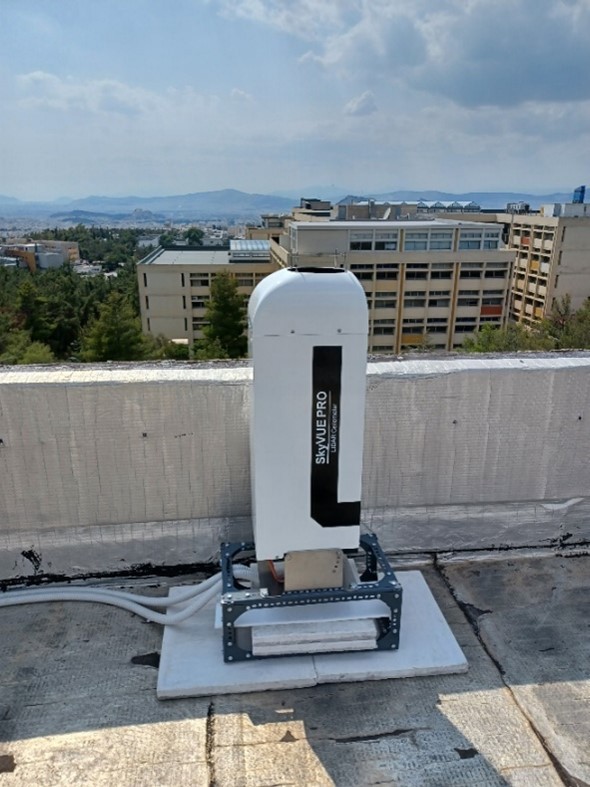
Characteristic examples during the operation of such instruments are provided in Figure 2 and Figure 3. The backscattered radiation beam (920 nm) recorded at time intervals of seconds (Figure 2) giving continuous monitoring of the atmospheric column in real time basis along with a series of very useful parameters such as cloud base height, cloud cover and estimation of atmospheric mixing height (Figure 3).
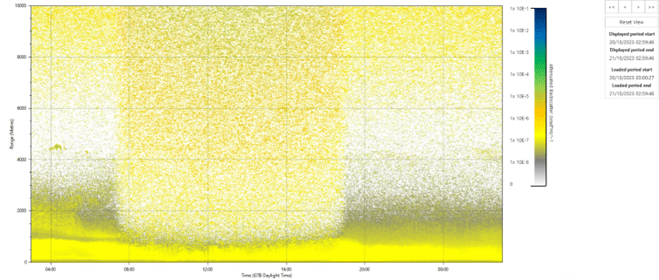
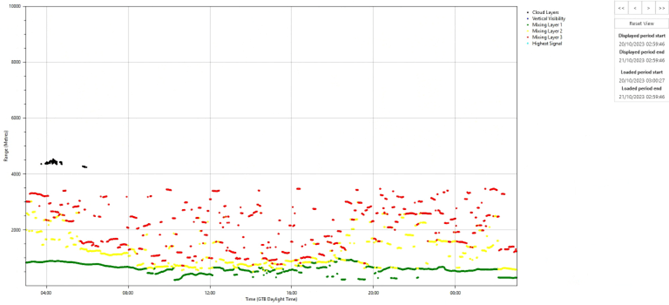
Figure 2. Backscatterred radiation on 21/10/2023

Figure 3. Daily measurement of mixing layer height along the cloud cover on 21/102023

Lidars light detection and ranging are considered very useful remote sensing instruments. The ceilometers, a specific category of these instruments are widely used in atmospheric sciences. They usually record the cloud base and types, mixing layer and vertical visibility. Such measurements are very useful:

  1. Αviation because cloud base height information, contributing to flight safety
  2. Μany meteorological weather forecasting services due to the continuous recording of the atmospheric state and its movements (mixing height estimation).
  3. Αssessing vertical visibility, possible fog and precipitation.
  4. In air quality because the degree of alteration of the emitted radiation is significantly affected by aerosols.
  5. In the recording of climatic characteristics of the wider operating area of the instruments and the study of extreme weather conditions.
  6. Combined use with satellite data for integrated applications and services as well as calibration of satellite estimates.

Vice-Rector Professor Sophia Papaioannou Meets Incoming Director of Harvard’s Center for Hellenic Studies in Greece, Professor Naomi Weiss

Vice-Rector Professor Sophia Papaioannou Meets Incoming Director of Harvard’s Center for Hellenic Studies in Greece, Professor Naomi Weiss

On Wednesday, 14 May 2026, Professor Sophia Papaioannou, Vice-Rector for Academic Affairs, International Relations and Extroversion at the National and Kapodistrian University of Athens, welcomed Professor Naomi Weiss, the newly appointed Director of Harvard’s Center for Hellenic Studies in Greece (CHS Greece), during her first visit to the country since taking up the post. Professor […]

Humanities and Technology: A Creative Synergy at NKUA

Humanities and Technology: A Creative Synergy at NKUA

The online workshop “Humanities and Technology: A Creative Synergy” was successfully held on Friday, 15 May 2026, organised by the Research Institute for the Digital Humanities and the Joint MSc Programme in Digital Humanities of the National and Kapodistrian University of Athens. The workshop highlighted the increasingly important dialogue between the humanities and contemporary digital […]

University of Athens Climbs to Record High in QS World University Rankings by Subject

University of Athens Climbs to Record High in QS World University Rankings by Subject

In the global top 100 in 4 subjects – ranked highly across 24 subjects The latest Quacquarelli Symonds World University Rankings by Subject, widely regarded as one of the most authoritative international ranking systems, has been released, offering a comprehensive assessment of universities across broad subject areas and more narrowly defined subjects worldwide. The 2026 […]

University of Athens Upgrades Student Halls of Residence – See the Before and After Photos

University of Athens Upgrades Student Halls of Residence – See the Before and After Photos

The University of Athens is carrying out a major upgrade programme of its student residences, aimed at improving living standards, strengthening safety measures, and enhancing students’ day-to-day experience. Working in partnership with the Youth and Lifelong Learning Foundation, the university has completed extensive refurbishment across the residences, restoring previously unused areas, carrying out major maintenance […]

University of Athens

The National and Kapodistrian University of Athens, which was inaugurated on May 3, 1837, was initially housed in a renovated Ottoman building on the northeastern side of the Acropolis. This building has since been restored and now functions as the University Museum. Originally named the "Othonian University," after Otto, the first king of Greece, it consisted of four academic departments and 52 students. As the first university of the newly established Greek state, as well as of the broader Balkan and Mediterranean region, it assumed an important socio-historical role, which was pivotal in the development of specific forms of knowledge and culture within the country.

Stay Connected

Follow hub.uoa.gr on Social Media

closebutton
Skip to content