

Announcements

Zanubrutinib Versus Ibrutinib in Symptomatic Waldenström Macroglobulinemia: Final Analysis From the Randomized Phase III ASPEN Study

Zanubrutinib Versus Ibrutinib in Symptomatic Waldenström Macroglobulinemia: Final Analysis From the Randomized Phase III ASPEN Study

We are proud to have another publication in WM: “Zanubrutinib Versus Ibrutinib in Symptomatic Waldenström Macroglobulinemia: Final Analysis From the Randomized Phase III ASPEN Study” (Journal of Clinical Oncology, 21/7/2023)

Also the ASPEN (BGB-3111-302) Final Analysis Manuscript titled, “Zanubrutinib Versus Ibrutinib in Symptomatic Waldenström Macroglobulinemia: Final Analysis From the Randomized Phase III ASPEN Study” is now published online in the Journal of Clincial Oncology (JCO)

Meletios A. Dimopoulos
Rector of NKUA

Abstract

The phase III ASPEN study demonstrated the comparable efficacy and improved safety of zanubrutinib versus ibrutinib in patients with Waldenström macroglobulinemia (WM). Here, we report long-term follow-up outcomes from ASPEN. The primary end point was the sum of very good partial response (VGPR) + complete response (CR) rates; secondary and exploratory end points were also reported. Cohort 1 comprised 201 patients (myeloid differentiation primary response 88–mutant WM: 102 receiving zanubrutinib; 99 receiving ibrutinib); cohort 2 comprised 28 patients (myeloid differentiation primary response 88 wild-type WM: 28 zanubrutinib; 26 efficacy evaluable). At 44.4-month median follow-up, VGPR + CR rates were 36.3% with zanubrutinib versus 25.3% with ibrutinib in cohort 1 and 30.8% with one CR in cohort 2. In patients with CXC motif chemokine receptor 4 mutation, VGPR + CR rates were 21.2% with zanubrutinib versus 10.0% with ibrutinib (cohort 1). Median progression-free survival and overall survival were not reached. Any-grade adverse events (AEs) of diarrhea (34.7% v 22.8%), muscle spasms (28.6% v 11.9%), hypertension (25.5% v 14.9%), atrial fibrillation/flutter (23.5% v 7.9%), and pneumonia (18.4% v 5.0%) were more common with ibrutinib versus zanubrutinib; neutropenia (20.4% v 34.7%) was less common with ibrutinib versus zanubrutinib (cohort 1). Zanubrutinib was associated with lower risk of AE-related treatment discontinuation. Overall, these findings confirm the long-term response quality and tolerability associated with zanubrutinib.

Link of publication: https://ascopubs.org/doi/abs/10.1200/JCO.22.02830

Also attached below is the pdf version of the article:

University of Athens Upgrades Student Halls of Residence – See the Before and After Photos

University of Athens Upgrades Student Halls of Residence – See the Before and After Photos

The University of Athens is carrying out a major upgrade programme of its student residences, aimed at improving living standards, strengthening safety measures, and enhancing students’ day-to-day experience. Working in partnership with the Youth and Lifelong Learning Foundation, the university has completed extensive refurbishment across the residences, restoring previously unused areas, carrying out major maintenance […]

Invitation to the opening ceremony of the International Interdisciplinary Conference titled: “Borders: Literary, Cultural and Political Dialogues”

Invitation to the opening ceremony of the International Interdisciplinary Conference titled: “Borders: Literary, Cultural and Political Dialogues”

The Rector of the National and Kapodistrian University of Athens Professor Gerasimos Siasos cordially invites you to the opening ceremony of the International Interdisciplinary Conference entitled: “Borders: Literary, Cultural and Political Dialogues” organized by the Department of English Language and Literature of the School of Philosophy of the University of Athens and the Hellenic Association […]

University of Athens Delegation Visits New York and Boston to Showcase Academic Programmes and Advance International Partnerships

University of Athens Delegation Visits New York and Boston to Showcase Academic Programmes and Advance International Partnerships

A delegation from the National and Kapodistrian University of Athens visited New York and Boston to present the full range of the institution’s undergraduate and postgraduate programmes, including provision at its branch in Cyprus. Particular emphasis was placed on academic programmes delivered in English. During the visit, they met with the Consul General of Greece […]

University of Athens Strengthens Strategic Partnership with Boston University – Rector Gerasimos Siasos Meets President Melissa Gilliam in Boston

University of Athens Strengthens Strategic Partnership with Boston University – Rector Gerasimos Siasos Meets President Melissa Gilliam in Boston

A delegation from the National and Kapodistrian University of Athens visited Boston University, where they met with senior leadership to further strengthen ties between the two institutions. The discussions reaffirmed a shared commitment to expanding academic and research collaboration in key strategic areas. The visit followed President Melissa Gilliam’s October 2025 trip to Athens with […]

Athens Medical School Leadership Re-elected with Strong Mandate

Athens Medical School Leadership Re-elected with Strong Mandate

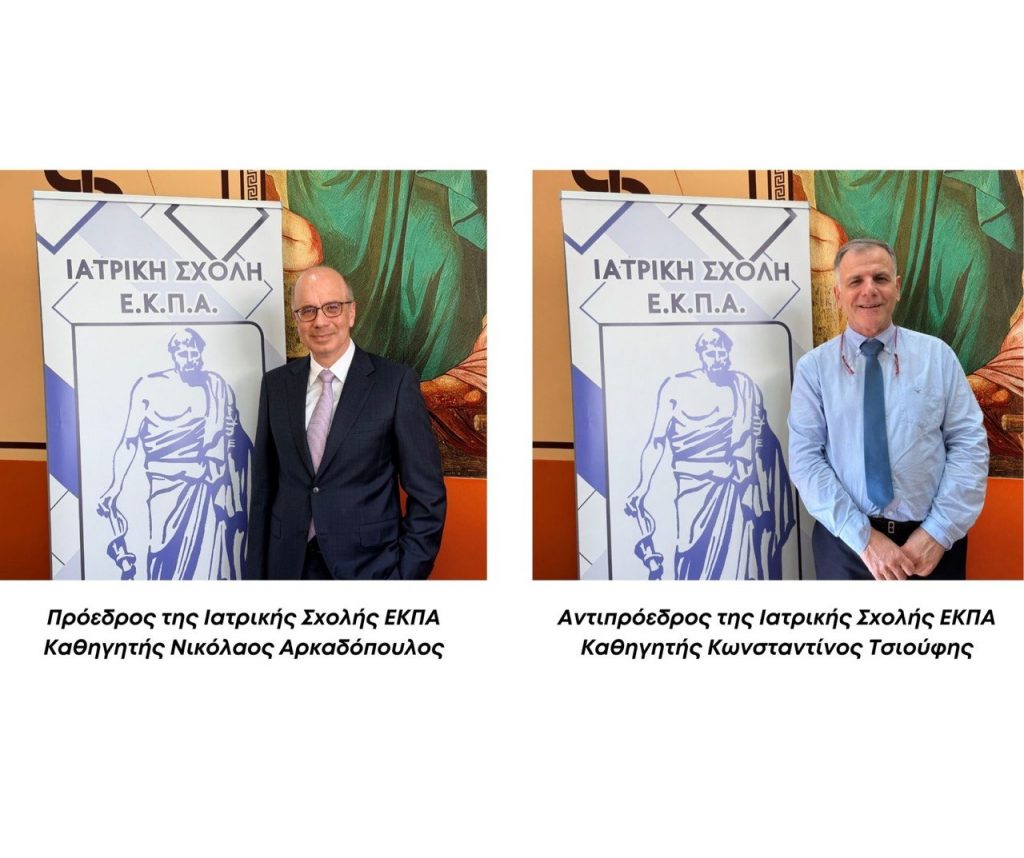
Professor of Surgery Nikos Arkadopoulos and Professor of Cardiology Kostas Tsioufis have been re-elected as Chair and Vice-Chair of the School of Medicine at the National and Kapodistrian University of Athens, securing over 95% of the vote in an election with a turnout of 94.1%, reflecting exceptionally high participation. The vote, cast by 600 faculty members, reaffirms strong confidence […]

University of Athens

The National and Kapodistrian University of Athens, which was inaugurated on May 3, 1837, was initially housed in a renovated Ottoman building on the northeastern side of the Acropolis. This building has since been restored and now functions as the University Museum. Originally named the "Othonian University," after Otto, the first king of Greece, it consisted of four academic departments and 52 students. As the first university of the newly established Greek state, as well as of the broader Balkan and Mediterranean region, it assumed an important socio-historical role, which was pivotal in the development of specific forms of knowledge and culture within the country.

Stay Connected

Follow hub.uoa.gr on Social Media

closebutton
Skip to content