Mapping, data design and analysis of current Service-Learning and Civic Engagement implementation practices existing in each partner University (SL-ICP, WP2).
Edited by Marlen Mouliou (NKUA).

Service-Learning (SL) is an innovative pedagogical approach that integrates meaningful community service into the curriculum and offers academic credit to students for the learning that derives from active engagement within community and work on a real world problem. Reflection and experiential learning strategies underpin the process and the service is linked to the academic disciplines under study.
“Service-Learning: Intersectoral Collaboration Practices for the development of students’ soft skills and socially engaged universities” (SL-ICP) is a two-year project (15/11/2022-14/11/2024) funded by Key Action 2 Cooperation Partnership – Higher Education. It aims at bringing awareness about SL as a pedagogical methodology at European universities and supporting all involved stakeholders (academics, students and civil society organisations) to establish and cement systematic collaborations in the higher education system with civil society organisations. The innovative learning and teaching practices implemented through SL are ideal for students who wish to gain diverse soft and hard skills as well as field experiences necessary for the work market.
There are six partners in this project, five universities (all of them members of CIVIS Alliance) and one coordinating NGO, the following:
- Eurasia net (French NGO): In charge of the management and global coordination of the project;
- National and Kapodistrian University of Athens (NKUA), Greece: Responsible for the mapping and analysis of current SL practices in partner universities;
- Autonomous University of Madrid (UAM), Spain: Responsible for the training of the academic staff of the partner universities to SL methodology and implementation;
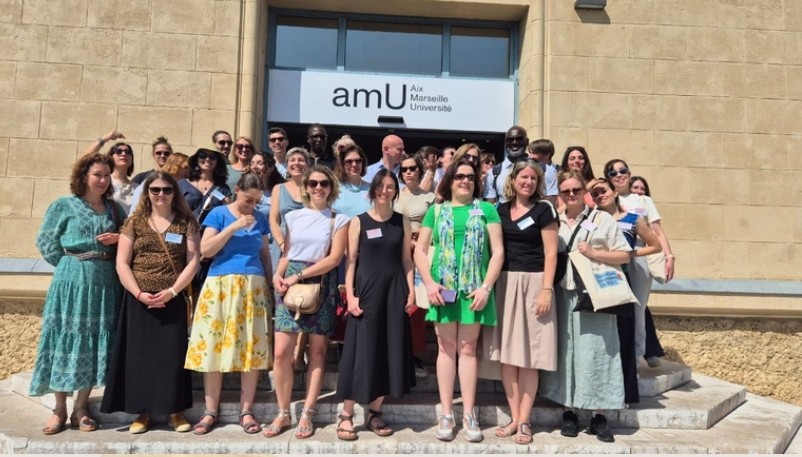
- University of Aix-Marseille (AMU), France: Assigned to promote SL projects at local and European level through events involving the stakeholders;
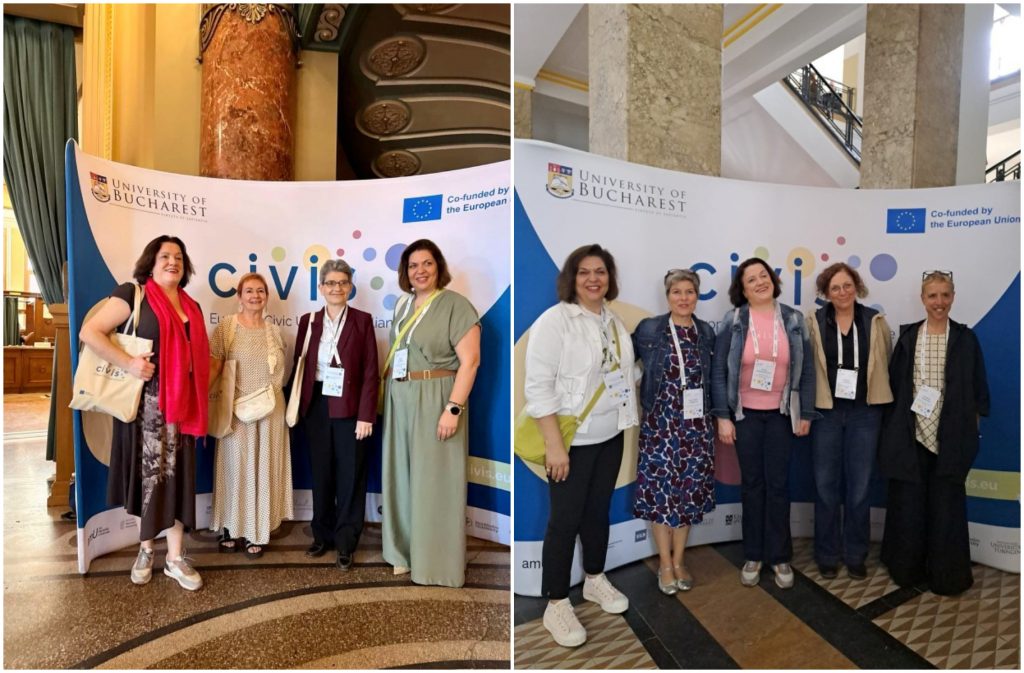
- University of Bucharest (UB), Romania: Responsible for creating a guide on the implementation of SL projects and organising a European Forum on SL in June 2024;
- Sapienza University of Rome (SUR), Italy: In charge of the communication, dissemination and promotion of SL teaching.
The project is funded by the European Union and monitored by Erasmus+ Agency involved: Education and Training, Bordeaux.
Mapping the existing practices in the universities was the first step in the development of the project in order to collect meaningful quantitative and qualitative data that could lead to better understanding of institutional pedagogic cultures about SL. The mapping would enable students and members of teaching staff to be mobilised directly in SL fields. This work was set under the aims and objectives of WP2 and was coordinated by the NKUA, which prepared and implemented all necessary steps and materials for the collection of required qualitative and quantitative material.
WP2 was designed right from the start as a very ambitious, highly challenging research-oriented strand of the SL-ICP project. Its key objectives were to i) explore the status of SL practices in the five partnering universities, ii) understand if other methodologies similar to SL are followed but not recognised as SL, iii) assess whether the use of SL is systematic, iv) trace possible changes in the use of SL, v) check similarities and differences between the universities etc.
The way mapping of all research questions was designed through survey questionnaires (for teachers and students), well-structured Focus Group meetings, finely-tuned interviews with students, thoroughly described case-studies based on a well structured template, provided ample evidence and valuable material for further analysis and action.
WP2 material serves as both a research and advocacy tool as well as a creative springboard for the other WPs of SL–ICP project. Its Deliverables are two very extensive repositories of original research data collected from hundreds of students and teachers. They are also an extremely effective synthesis of the data collected, visualised in aesthetically striking and easily readable formats.
Deliverable 1 is the Extended Version of the mapping and synthesis of all data collected, presented in 253 pages. Deliverable 2 is the Brief Version of the same material, presented in 35 pages.
Both volumes have been edited by Marlen Mouliou, Assistant Professor of Museology at the National and Kapodistrian University of Athens, Coordinator of WP2. All the material is based on work provided by hundreds of contributors by all the universities and Eurasia Net. Without their contribution, the synthesis of this work would not have been possible.
Both all available at:
SL_Mapping&DataDesign_(Extended Version).
SL_Mapping&DataDesign_(Brief Version).
Useful online links for the project:
https://eurasianet.eu/en/sl-icp-university-empowering-society/
https://web.uniroma1.it/memotef/sites/default/files/allegati/SL_Mapping%26DataDesign_Brief%20Version.pdf
https://web.uniroma1.it/memotef/sites/default/files/allegati/SL_Mapping%26DataDesign_Extended%20Version.pdf