Announcements

The Legislative Process and Regulatory Interventions in the Greek Democracy: Deep-Rooted Weaknesses and Recommendations for Improvement | Article by the Emeritus Professor of NKUA P. Petrakis in Statute Law Review

The Legislative Process and Regulatory Interventions in the Greek Democracy: Deep-Rooted Weaknesses and Recommendations for Improvement | Article by the Emeritus Professor of NKUA P. Petrakis in Statute Law Review

On January 30, 2024, an article by the Emeritus Professor of Economics of the Department of Economic Sciences of the NKUA, Mr. Panagiotis E. Petrakis, entitled “The Legislative Process and Regulatory Interventions in the Greek Democracy: Deep-Rooted Weaknesses and Recommendations for Improvement” was published in the scientific journal Statute Law Review.

In the abstract of the article it states:

The economy’s legislative, regulatory, and institutional framework profoundly influences growth. It sets societal norms and motivates economic players towards desired outcomes. Greece faces a complex challenge in enhancing its institutional structure, with interconnected issues demanding comprehensive and persistent intervention. Political stability positively impacts regulatory quality, while instability prompts resistance to government changes, affecting legislation efficacy and governmental honesty. The study identifies two counterproductive forces hindering law improvement. First, the executive power’s reluctance to measure legislative effectiveness Second, there is a pervasive distrust in law enforcers, resulting in convoluted legal frameworks. This setup aligns with statism and a flawed concept of legal certainty. Improving the legal framework requires the executive to prioritize self-assessment of efficacy and trust in law enforcement—a cornerstone of effective liberal democracy. The study advocates specific policy guidelines tailored for the Greek state. Addressing these concerns mandates an all-encompassing, persistent, and introspective approach by those in power. Ultimately, fostering trust, measuring effectiveness, and simplifying legal constructs are vital for Greece to enhance its institutional framework and foster a more effective liberal democracy. Lastly, the provision of training to those who shape and evaluate the laws is crucial to ensure high-quality regulations and interventions.

See the full article in the Statute Law Review: https://academic.oup.com/slr/article/45/1/hmae001/7591815?login=false

See the republishing at InDeep Analysis: http://indeepanalysis.gr/oikonomia/state-law-review-article

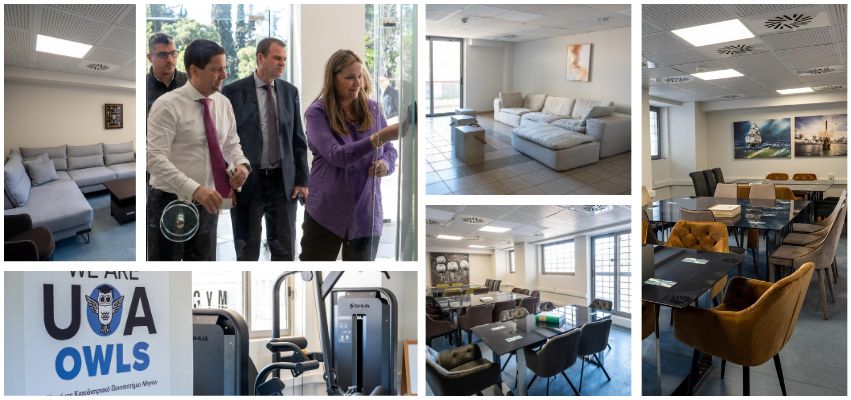
University of Athens Upgrades Student Halls of Residence – See the Before and After Photos

University of Athens Upgrades Student Halls of Residence – See the Before and After Photos

The University of Athens is carrying out a major upgrade programme of its student residences, aimed at improving living standards, strengthening safety measures, and enhancing students’ day-to-day experience. Working in partnership with the Youth and Lifelong Learning Foundation, the university has completed extensive refurbishment across the residences, restoring previously unused areas, carrying out major maintenance […]

Invitation to the opening ceremony of the International Interdisciplinary Conference titled: “Borders: Literary, Cultural and Political Dialogues”

Invitation to the opening ceremony of the International Interdisciplinary Conference titled: “Borders: Literary, Cultural and Political Dialogues”

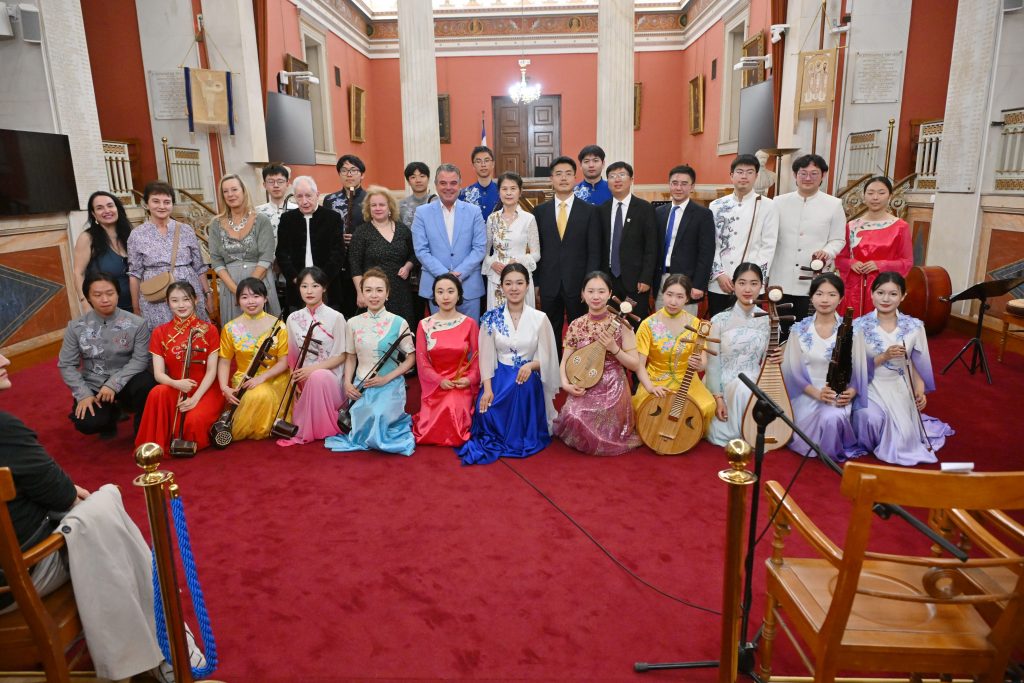
The Rector of the National and Kapodistrian University of Athens Professor Gerasimos Siasos cordially invites you to the opening ceremony of the International Interdisciplinary Conference entitled: “Borders: Literary, Cultural and Political Dialogues” organized by the Department of English Language and Literature of the School of Philosophy of the University of Athens and the Hellenic Association […]

University of Athens Delegation Visits New York and Boston to Showcase Academic Programmes and Advance International Partnerships

University of Athens Delegation Visits New York and Boston to Showcase Academic Programmes and Advance International Partnerships

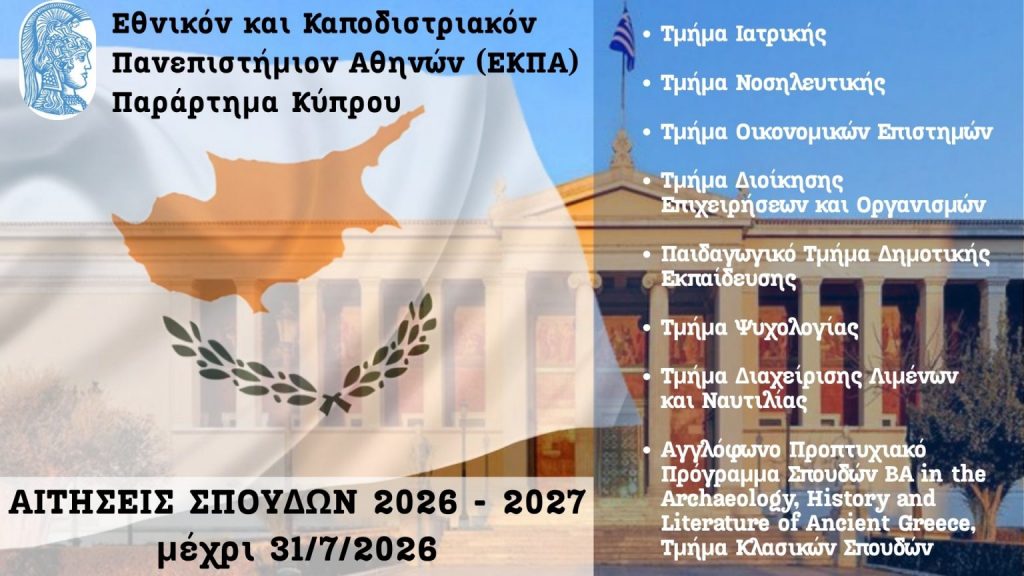
A delegation from the National and Kapodistrian University of Athens visited New York and Boston to present the full range of the institution’s undergraduate and postgraduate programmes, including provision at its branch in Cyprus. Particular emphasis was placed on academic programmes delivered in English. During the visit, they met with the Consul General of Greece […]

University of Athens Strengthens Strategic Partnership with Boston University – Rector Gerasimos Siasos Meets President Melissa Gilliam in Boston

University of Athens Strengthens Strategic Partnership with Boston University – Rector Gerasimos Siasos Meets President Melissa Gilliam in Boston

A delegation from the National and Kapodistrian University of Athens visited Boston University, where they met with senior leadership to further strengthen ties between the two institutions. The discussions reaffirmed a shared commitment to expanding academic and research collaboration in key strategic areas. The visit followed President Melissa Gilliam’s October 2025 trip to Athens with […]

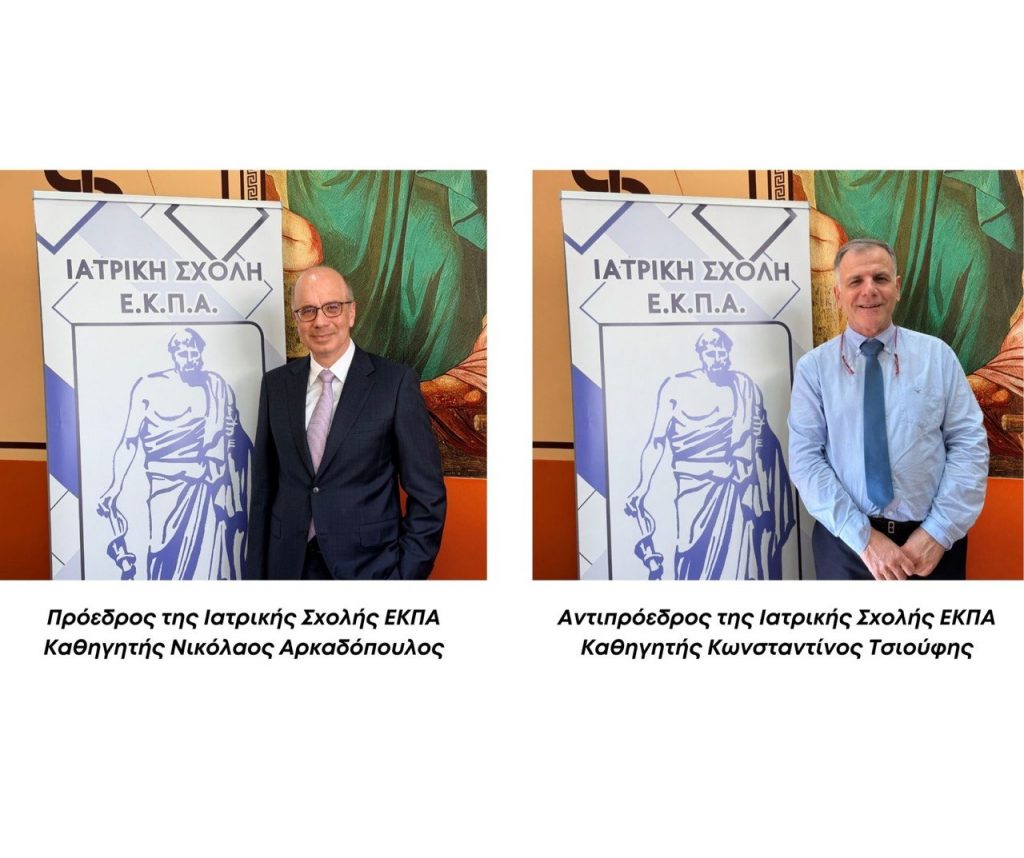
Athens Medical School Leadership Re-elected with Strong Mandate

Athens Medical School Leadership Re-elected with Strong Mandate

Professor of Surgery Nikos Arkadopoulos and Professor of Cardiology Kostas Tsioufis have been re-elected as Chair and Vice-Chair of the School of Medicine at the National and Kapodistrian University of Athens, securing over 95% of the vote in an election with a turnout of 94.1%, reflecting exceptionally high participation. The vote, cast by 600 faculty members, reaffirms strong confidence […]

University of Athens

The National and Kapodistrian University of Athens, which was inaugurated on May 3, 1837, was initially housed in a renovated Ottoman building on the northeastern side of the Acropolis. This building has since been restored and now functions as the University Museum. Originally named the "Othonian University," after Otto, the first king of Greece, it consisted of four academic departments and 52 students. As the first university of the newly established Greek state, as well as of the broader Balkan and Mediterranean region, it assumed an important socio-historical role, which was pivotal in the development of specific forms of knowledge and culture within the country.

Stay Connected

Follow hub.uoa.gr on Social Media

closebutton
Skip to content