Announcements

Gulf of Corinth: impressive findings from the small “Black Sea” of the Mediterranean

Gulf of Corinth: impressive findings from the small “Black Sea” of the Mediterranean

New research by the National and Kapodistrian University of Athens reveals that during the glacial periods of the last million years, tiny algae grew in the Gulf of Corinth, which until now were known only from the Black Sea region.

In 2017, the International Ocean Discovery Program’s research expedition 381: The Corinth Active Rift Development, carried out deep drilling, recovering thousands of meters of sediment from the Gulf of Corinth. In the deposits the geo-environmental history of the region has been captured in detail. For more than 800 000 years, the Gulf has been isolated and reconnected to the Mediterranean, following the global sea level fluctuations. During the Earth’s warm periods, known as interglacials, the sea level was about the same or higher than today’s, resulting in the region being a sea basin. In contrast, during the glacial intervals, when the sea level were much lower, the Gulf became an isolated brackish to freshwater “lake”.  

The shifts in the aquatic environment affected the organisms that lived in it and were recorded in detail in the sediments. Marine micro-organisms are among the first to be affected by variations in environmental conditions: some groups that cannot tolerate low salinity disappear and other, more resistant adapt. The dinoflagellates, microscopic algae found in the water column belong to the second category. In addition, in their short life cycle they develop a characteristic cyst, which is preserved in the sediments. The Corinthian ‘archive’ is rich in such cysts.

The dinoflagellates identified during the analysis of the sediments were divided into two main ecological groups, which alternated with each other. During the warm periods, the dinoflagellate assemblages were diverse and had great similarities to those living in the Mediterranean Sea nowadays. Furthermore, the presence of thermophilic species indicates higher temperatures compared to other areas of the eastern Mediterranean. In contrast, when the Gulf of Corinth was isolated from the Mediterranean, dinoflagellate species living in low salinity environments were identified and the diversity of assemblages appears extremely low. The predominance of Spiniferites cruciformis, but also of Pyxidinopsis psilata and Caspidinium rugosum species, especially during the glacial periods, e.g. between 130 – 191 and 424 – 478 thousand years ago (MIS 6 and MIS 12, respectively) imply the prevalence of low salinity conditions in the Gulf. These algae are found, both today as well as in the past, exclusively in the Black Sea, the Marmara Sea and the Caspian Sea, and are reported for the first time outside these regions.

Recording these particular brackish species of dinoflagellates, for the first time outside the Pontocaspian Region, is impressive and overturns the hitherto known data on their distribution. These findings raise new interesting scientific questions, says Dr. Katerina Kouli, Associate Professor at the National and Kapodistrian University of Athens. “The sedimentary deposits of the Gulf of Corinth, a valuable archive of information about the past of the Mediterranean, gradually reveals unknown aspects of the ecosystems response to climate variability over the last million years.”

The scientific research is carried out in the framework of the research project “Quaternary Environmental Changes in the Corinth Rift Area: the IODP 381 palaeovegetation record-QECCoRA“, which is implemented by the Palynolgy Group at the Department of Geology and Geoenvironment of the National and Kapodistrian University of Athens. The project is funded by the Hellenic Foundation for Research and Innovation (EL.ID.EK) within the framework of the ” 1st Announcement of ELIDEK research projects for faculty members and researchers and the supply of research high value equipment”. The study material was collected during the IODP Exp.381: The Corinth Active Rift Development” in which Greek researchers actively participated. This international environment ensures the quality and high impact of the scientific results produced, enhancing the visibility of the research produced in the country through renowned international collaborations.

Publication:

Fatourou, E., Kafetzidou, A., Marret, F., Panagiotopoulos, K., & Kouli, K. (2023). Late Quaternary Ponto-Caspian dinoflagellate cyst assemblages from the Gulf of Corinth, Central Greece (eastern Mediterranean Sea). Marine Micropaleontology, 179, 102211. https://doi.org/10.1016/j.marmicro.2023.102211 webpage: https://qeccora.geol.uoa.gr

Figure:
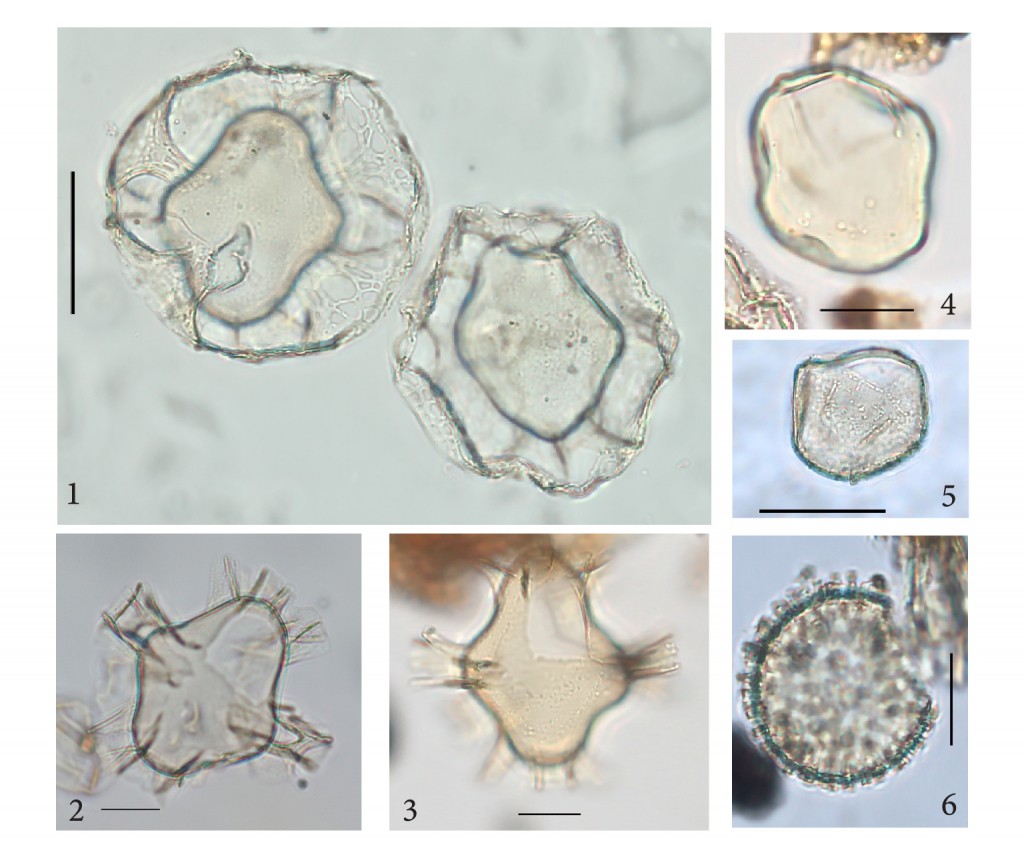
Brackish species 01

Microscopic photographs of brackish dinoflagellate cysts from the Gulf of Corinth deposits (scale 20μm): 1-3) Spiniferites cruciformis, 4) Pyxidinopsis psilata 5) Caspidinium rugosum, 6) Lingulodinium machaerophorum short processes: low salinity morphotype
Live: Day Two of the ‘Dialogues for Athens’ Conference

Live: Day Two of the ‘Dialogues for Athens’ Conference

Follow our live blog for minute-by-minute coverage of ‘Dialogues for Athens’, organised by To Vima under the auspices of the University of Athens and the City of Athens, taking place on 6–7 October 2026. Συνέδριο του «Β» για την Αθήνα: Οι υψηλές παρουσίες, το πρόγραμμα και η ατζέντα της 2ης ημέρας – Ζωντανή μετάδοση Watch […]

Live: Day One of the ‘Dialogues for Athens’ Conference

Live: Day One of the ‘Dialogues for Athens’ Conference

Follow our live blog for minute-by-minute coverage of ‘Dialogues for Athens’, organised by To Vima under the auspices of the University of Athens and the City of Athens, taking place on 6–7 October 2026. Watch all the talks and discussions at the conference.

Complete Anatomy Training Session [October 7, 2026]

Complete Anatomy Training Session [October 7, 2026]

The NKUA Library and Information Centre in collaboration with Elsevier invite students, faculty members and researchers to a training session on Complete Anatomy, the leading 3D human anatomy platform, available to the academic community through the HEAL-Link consortium license. During the session, participants will learn how to: • Activate their access using the institutional license […]

University of Athens Signs Memorandum of Understanding with Poznań University of Medical Sciences

University of Athens Signs Memorandum of Understanding with Poznań University of Medical Sciences

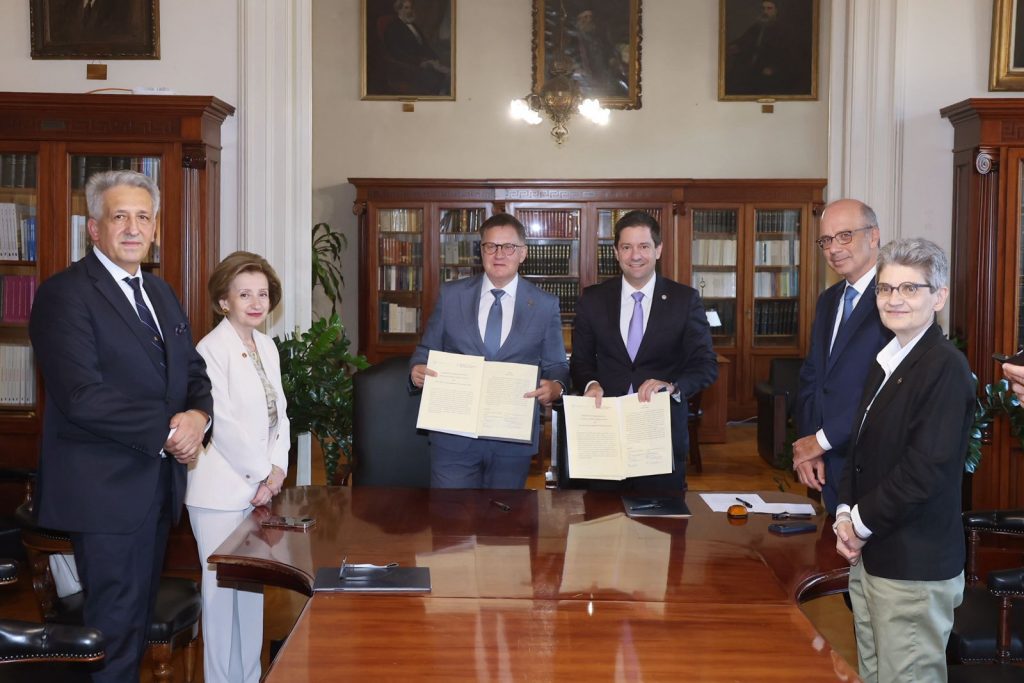
The Rector of the National and Kapodistrian University of Athens, Professor Gerasimos Siasos, and the Rector of the Poznań University of Medical Sciences, Professor Zbigniew Krasiński, have signed a Memorandum of Understanding, further strengthening academic and scientific ties between the two universities. Among those attending the signing ceremony were Marek Ruchała, Professor of Endocrinology at […]

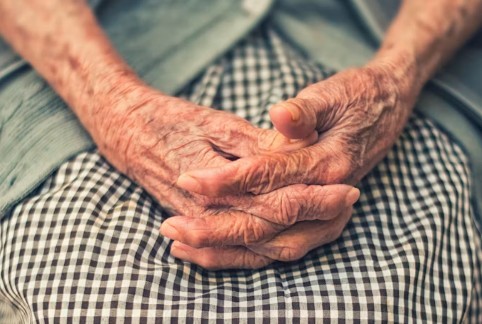
Equipping Health and Social Care Professionals to support older people during climate crises: Results from the chAnGE project

Equipping Health and Social Care Professionals to support older people during climate crises: Results from the chAnGE project

The three-year project chAnGE (Climate change and healthy AgeinG: co-creating E-learning for resilience and adaptation), an Erasmus+ project co-funded by the European Union, was completed at the end of September 2026. In this project the partner from the National and Kapodistrian University of Athens was the Sector of Public Health, Department of Nursing. Partners from […]

Research Seminar: EU Politics in Times of Disasters

Research Seminar: EU Politics in Times of Disasters

On 24 September 2026, the research seminar EU Politics in Times of Disasters: Climate, Energy, Environment was held at the History Museum of the University of Athens. The seminar was organized by Αsst. Prof. (under appointment) George Dikaios, in the framework of his Marie Curie Fellowship, ‘Climatization of EU Policies: The Case of Maritime Transport’ […]

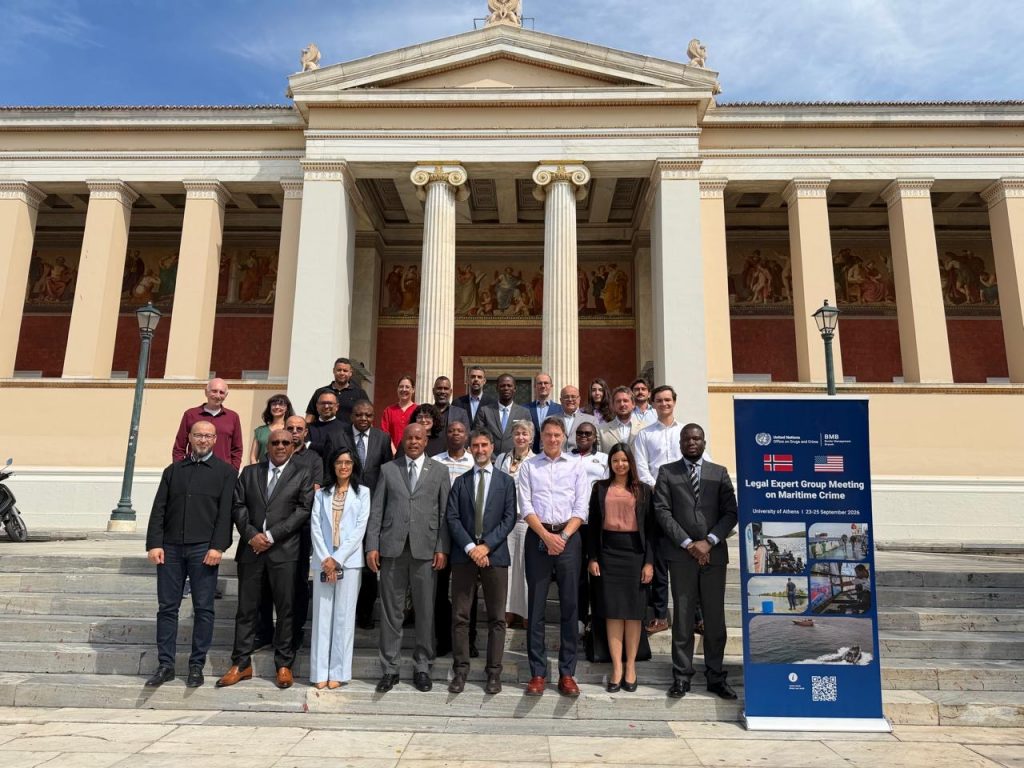
Legal Experts Group Meeting (LEGM) of the UN Office on Drugs and Crime (UNODC), Athens 23-25.9.2026

Legal Experts Group Meeting (LEGM) of the UN Office on Drugs and Crime (UNODC), Athens 23-25.9.2026

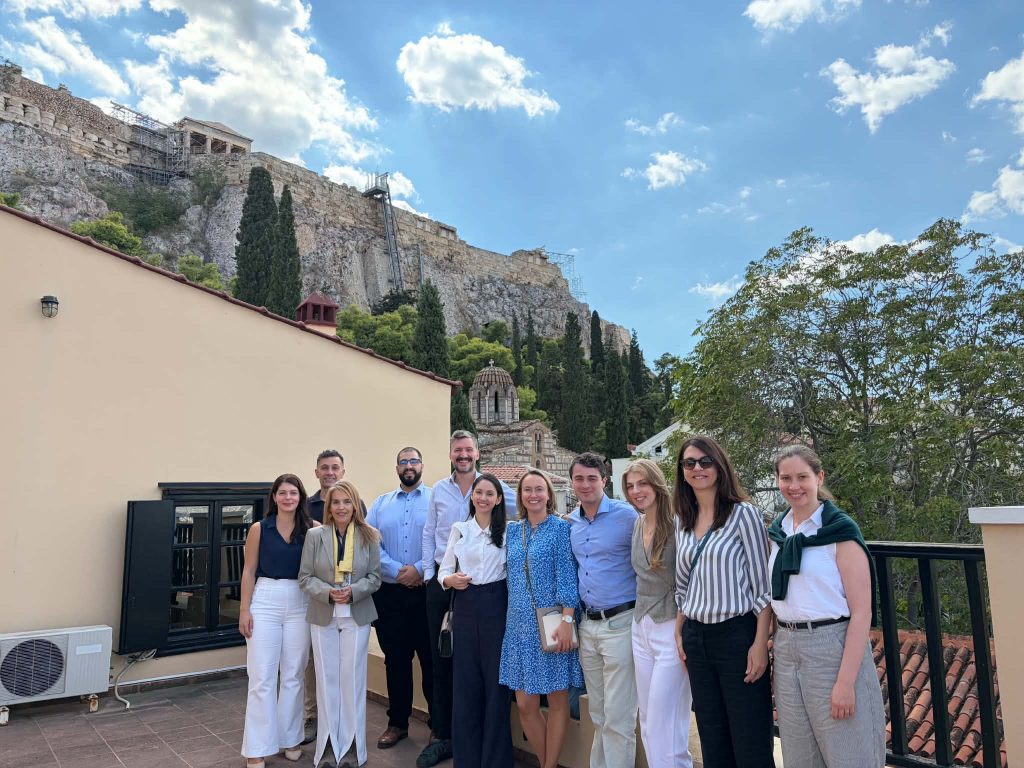
https://www.athenspil.law.uoa.gr/news_and_events/view_announcement/legal_experts_group_meeting_legm_of_the_un_office_on_drugs_and_crime_unodc_athens_23_2592026   On 23–25 September 2026, the Athens PIL Center and the School of Law of the National and Kapodistrian University of Athens had the great honour of hosting at the premises of the University the annual Legal Experts Group Meeting (LEGM) of the UN Office on Drugs and Crime (UNODC) Border Management Branch (Global […]

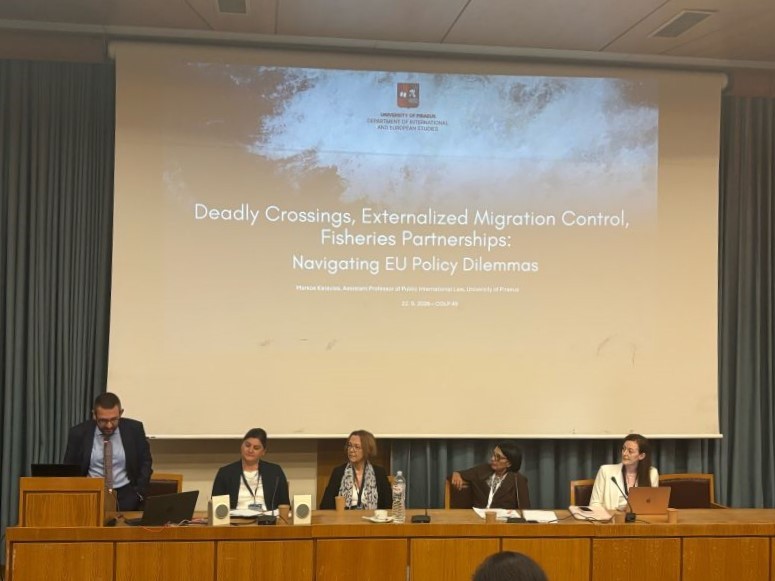
The 49th Annual Conference on Oceans Law & Policy (COLP49), held in Athens on 21–22 September 2026, was successfully concluded

The 49th Annual Conference on Oceans Law & Policy (COLP49), held in Athens on 21–22 September 2026, was successfully concluded

https://www.athenspil.law.uoa.gr/news_and_events/view_announcement/the_49th_annual_conference_on_oceans_law_policy_colp49_held_in_athens_on_2122_september_2026_was_successfully_concluded The 49th Annual Conference on Oceans Law & Policy (COLP49) with the general theme: “Maritime Security in the Mediterranean Sea and Beyond” was successfully held on 21–22 September 2026 at the National and Kapodistrian University of Athens (NKUA). It was the first time this prestigious conference was hosted in this country. Co-organised by the […]

‘Dialogues for Athens’ Conference Organised by TO VIMA Under the Auspices of the National and Kapodistrian University of Athens and the Municipality of Athens [6-7 October]

‘Dialogues for Athens’ Conference Organised by TO VIMA Under the Auspices of the National and Kapodistrian University of Athens and the Municipality of Athens [6-7 October]

https://dialoguesforathens.tovima.gr The Rector of the National and Kapodistrian University of Athens, Professor Gerasimos Siasos, cordially invites you to the opening ceremony of the conference ‘Dialogues for Athens’. The ceremony will be honoured by the presence of H.E. the President of the Hellenic Republic, Mr. Constantine An. Tassoulas. The conference is organised by To Vima, under […]

Interview with the University of Athens Rector Professor Gerasimos Siasos at alfavita.gr: Work, Vision and Priorities

Interview with the University of Athens Rector Professor Gerasimos Siasos at alfavita.gr: Work, Vision and Priorities

https://www.alfavita.gr/ekpaideysi/562161_i-megali-synenteyxi-toy-prytani-toy-ekpa-gerasimoy-siasoy-sto-alfavita-ergo-orama The Rector of the National and Kapodistrian University of Athens and President of the Hellenic Universities Rectors’ Conference, Professor of Cardiology Gerasimos Siasos, welcomed alfavita.gr to the University’s historic Main Building at the Propylaea. There, he spoke to journalist Nikos Lourdas for the publication’s Vidcast series. The wide-ranging interview touches on his own journey […]

Ninth Issue of UNIVERSITY OF ATHENS Newspaper Published with TO VIMA

Ninth Issue of UNIVERSITY OF ATHENS Newspaper Published with TO VIMA

The ninth issue of University of Athens: The Newspaper of Science, Education and Culture was published as a supplement to the Sunday edition of To Vima on 27 September 2026. The lead story, ‘The cancer vaccine revolution’, explores the latest advances in cancer research. Four University of Athens professors examine the potential of new cancer […]

University of Athens

The National and Kapodistrian University of Athens, which was inaugurated on May 3, 1837, was initially housed in a renovated Ottoman building on the northeastern side of the Acropolis. This building has since been restored and now functions as the University Museum. Originally named the "Othonian University," after Otto, the first king of Greece, it consisted of four academic departments and 52 students. As the first university of the newly established Greek state, as well as of the broader Balkan and Mediterranean region, it assumed an important socio-historical role, which was pivotal in the development of specific forms of knowledge and culture within the country.

Stay Connected

Follow hub.uoa.gr on Social Media

closebutton
Skip to content