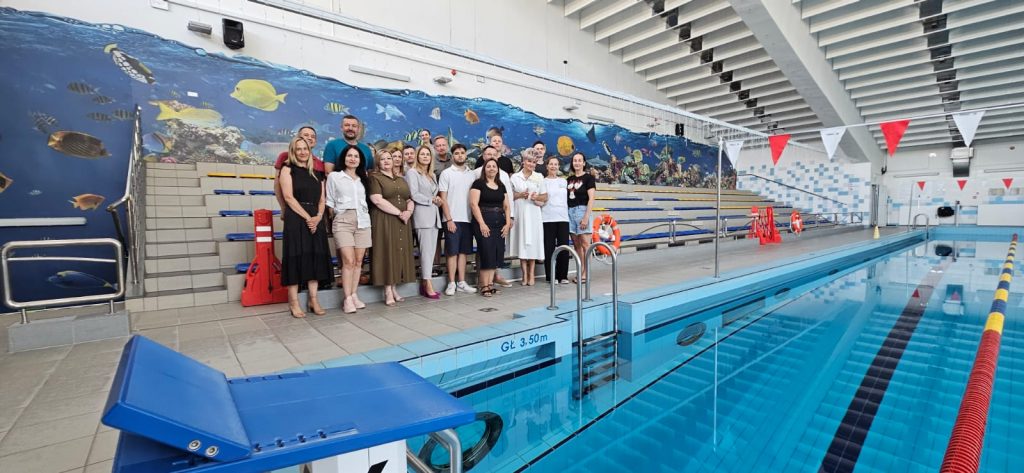
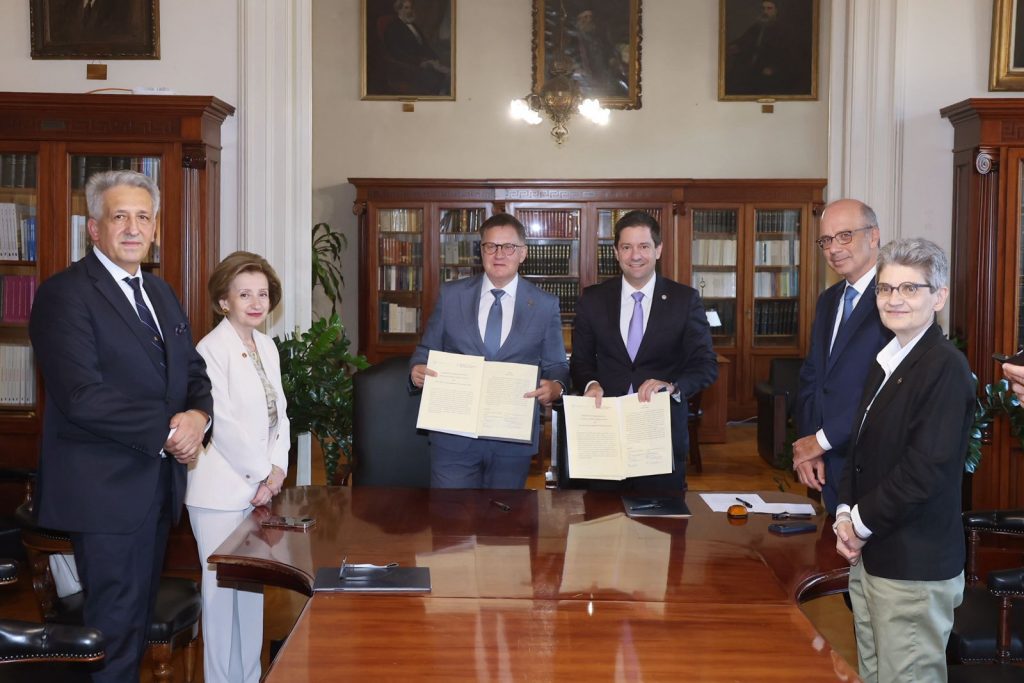
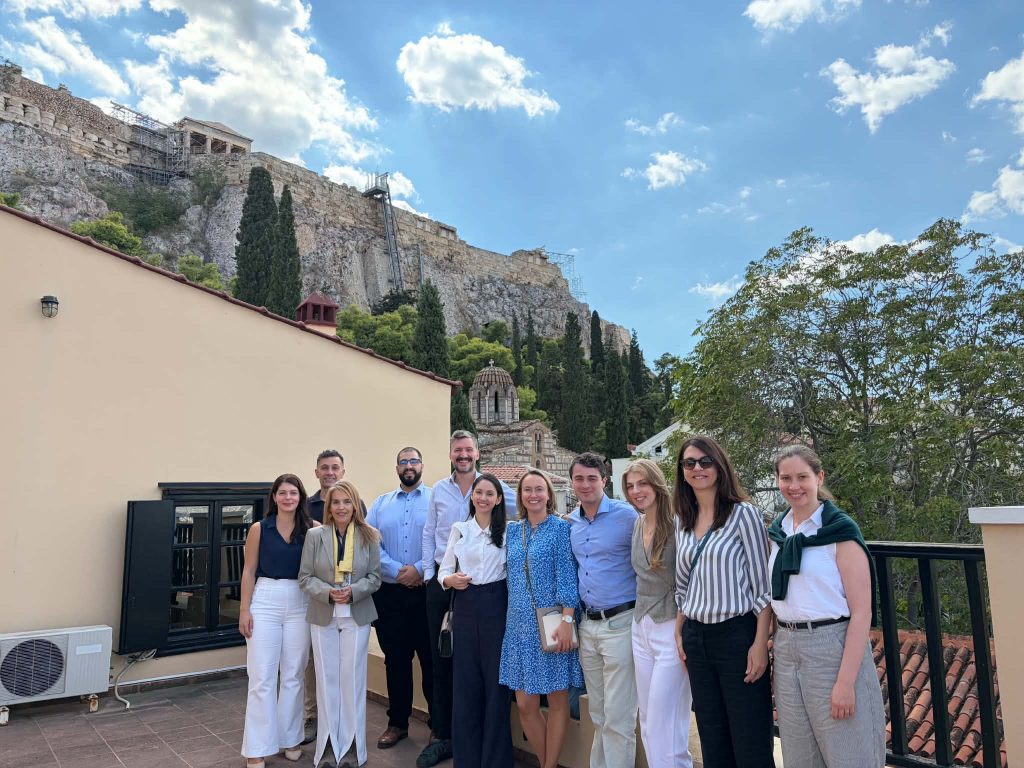
The three-year project chAnGE (Climate change and healthy AgeinG: co-creating E-learning for resilience and adaptation), an Erasmus+ project co-funded by the European Union, was completed at the end of September 2026. In this project the partner from the National and Kapodistrian University of Athens was the Sector of Public Health, Department of Nursing. Partners from Greece included Exelixi VET and AKTIOS elderly care units. In the consortium participated: the University College Cork, (coordinator) and the Health Service Executive, Ireland; the University of Lisbon, Hospital da Luz and Emeis, Portugal; Carinthia University of Applied Sciences and the KABEB State Hospital, Austria; Karelia University of Applied Sciences, and Riveria VET, Finland.
Following a very difficult summer for Europe, the climate crisis showed us how important it is to prepare for the years to come. In addition to that, Europe’s population is ageing rapidly, and the climate crisis imposes one more difficulty for caring for vulnerable members of this population. Health and Social Care (HSC) professionals are those who will be expected to support older people during different climate crises that may arise in the future.
A needs analysis and thorough collaboration of different stakeholders – educators, possible learners, HSC organisation managers and older people –, the project team developed 14 microcredentials (MCs) that were categorised into four groups: knowledge and analytical skills, self-management skills, communication and collaboration, and policy and governance. During the last 15 months, HSC professionals from the five partner countries undertook the online learning. All MCs were developed for EQF level 5 and 6 (advanced concepts), and some of them at level 4 (foundation learning). Three of the MCs are available in all five languages (English, Finnish, German, Greek and Portuguese), and so are those developed for EQF level 4. The rest are available in English and in the language of the team that developed them.
To be able to assess its impact on HSC professionals’ preparedness to care for older people, multiple methods of evaluation were used throughout the learning process. Knowledge was assessed by pre- and post-tests; experience with online learning was assessed by a short, embedded questionnaire during the process and a more detailed post-learning survey that includes aspects like technical acceptance and perceived state of the art of the learning methods. To further examine the learning experience, the usefulness of learning, and its application in everyday work, in-depth interviews were carried out following completion of learning with learners and HSC managers. Educators and senior staff of Higher Education and Vocational Education Institutes that were involved either in developing or ensuring accreditation of MCs were also interviewed to explore the difficulties during developing and running the MCs as well as the planned maintenance of the programme.
The results from the different methods and stakeholders showed that knowledge was improved; learners’ experience with learning was very positive, both with the content of the MCs but also the method of online asynchronous learning, although not all of them were experienced with this kind of education. HSC managers found the programme useful and observed the positive impact on their staff practices. Educators from Higher Education and Vocational Training institutions, although they found it challenging in terms of workload and method used, expressed satisfaction with the result.
The results of the project, especially considering that its development and running coincided with various climate crises (heatwaves, storms, wildfires, drought, etc.) in Europe and the world, confirm the importance of developing this suite of microcredentials.
Following the conclusion of the project, there is a strong will from all partners to continue developing and using the MCs either as accredited lifelong learning short courses or incorporating parts of them in relevant educational curricula. As part of the obligation to our funder, the detailed content of each MC (at each level) is available to other institutions to adapt or incorporate into learning offerings, on the project’s website, in English.
If you want to learn more about the MCs content and the project results, you can visit our website here.
More information: Contact – chAnGE
DISCLAIMER
Co-funded by the European Union. Views and opinions expressed are those of the author(s) only and do not necessarily reflect those of the European Union or the European Education and Culture Executive Agency (EACEA). Neither the European Union nor EACEA can be held responsible for them.


![Complete Anatomy Training Session [October 7, 2026]](https://hub.uoa.gr/en/wp-content/uploads/2026/10/NKUA_Invite-for-Complete-Anatomy-Training-Session_page-0001-1-1024x604.jpg)
![‘Dialogues for Athens’ Conference Organised by TO VIMA Under the Auspices of the National and Kapodistrian University of Athens and the Municipality of Athens [6-7 October]](https://hub.uoa.gr/en/wp-content/uploads/2026/10/Untitled-Design2-1-1024x576-1.jpg)