
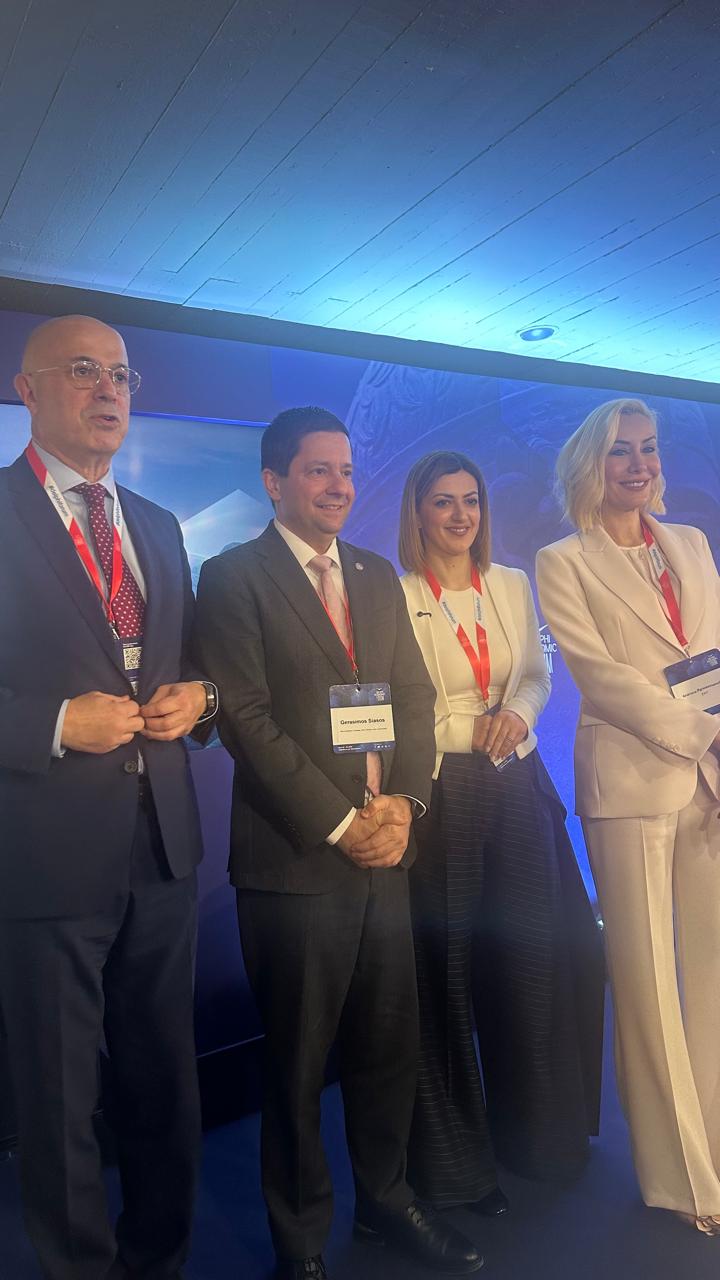
Speaking at the Delphi Economic Forum, the Rector of the National and Kapodistrian University of Athens, Professor Gerasimos Siasos, drew attention to the cardiovascular component of the PROLAMVANO initiative—the largest prevention programme of its kind in Greece. Designed by the University of Athens and implemented by the State, the programme has already screened three million citizens, while more than six million people have been reached overall.
Professor Siasos described PROLAMVANO as the most significant prevention programme ever undertaken in the country. Operating under the supervision of the Ministry of Health, its screening protocols were developed by leading academics from Greek universities, with the University of Athens playing a central role. In particular, he noted, the University was responsible for all phases of the cardiovascular component. Drawing on his own involvement, he characterised the initiative as ‘the most comprehensive programme in primary cardiovascular prevention ever implemented in Europe’.
He went on to emphasise that knowledge must reach citizens in ways that translate into tangible services and effective public policy. This, he argued, is the role of the modern university: to illuminate the path forward and to drive societal progress. When universities and the state work in close partnership, high-quality healthcare services can be delivered—often surpassing those available elsewhere in Europe. He cited the COVID-19 pandemic, the PROLAMVANO initiative, and a range of other joint actions as clear examples of this collaboration.
Referring to data from the World Health Organization, Professor Siasos noted that nearly 18 million people die each year from cardiovascular disease, accounting for approximately 32 per cent of all deaths worldwide.
In Europe, annual cardiovascular mortality stands at around 1.8 million. Greece faces a similarly serious burden, with cardiovascular causes responsible for more than one in three deaths. Citing data from the Hellenic Statistical Authority for 2019—the year preceding the COVID-19 pandemic—he reported a total of 124,538 deaths, of which 42,777 were attributed to heart and cerebrovascular diseases, representing roughly 34 per cent. Many of these deaths, however, could be prevented through early diagnosis, improved awareness, and targeted intervention. Evidence suggests that prevention programmes focusing on high-risk populations can avert one cardiovascular event for every 500 individuals screened. More than three million people have already participated in the programme, and full implementation is expected to prevent over 10,000 cardiovascular events or deaths.
Professor Siasos further argued that PROLAMVANO will not only reduce mortality and the incidence of heart attacks, but also identify individuals with previously undiagnosed risk factors—such as high cholesterol levels, high blood pressure, and diabetes—while helping to establish, for the first time, a culture of prevention within Greek society.

With regard to eligibility, the programme is open to all citizens aged 30 to 70 with no prior history of cardiovascular disease, a population estimated at 5.5 million.
Its primary focus, he explained, is on individuals with underlying but undiagnosed risk factors, whose first clinical manifestation may otherwise be a heart attack or sudden death.
He also observed that many citizens do not engage in preventive screening due to limited awareness, fear of diagnosis, financial difficulties, or limited access to healthcare services.
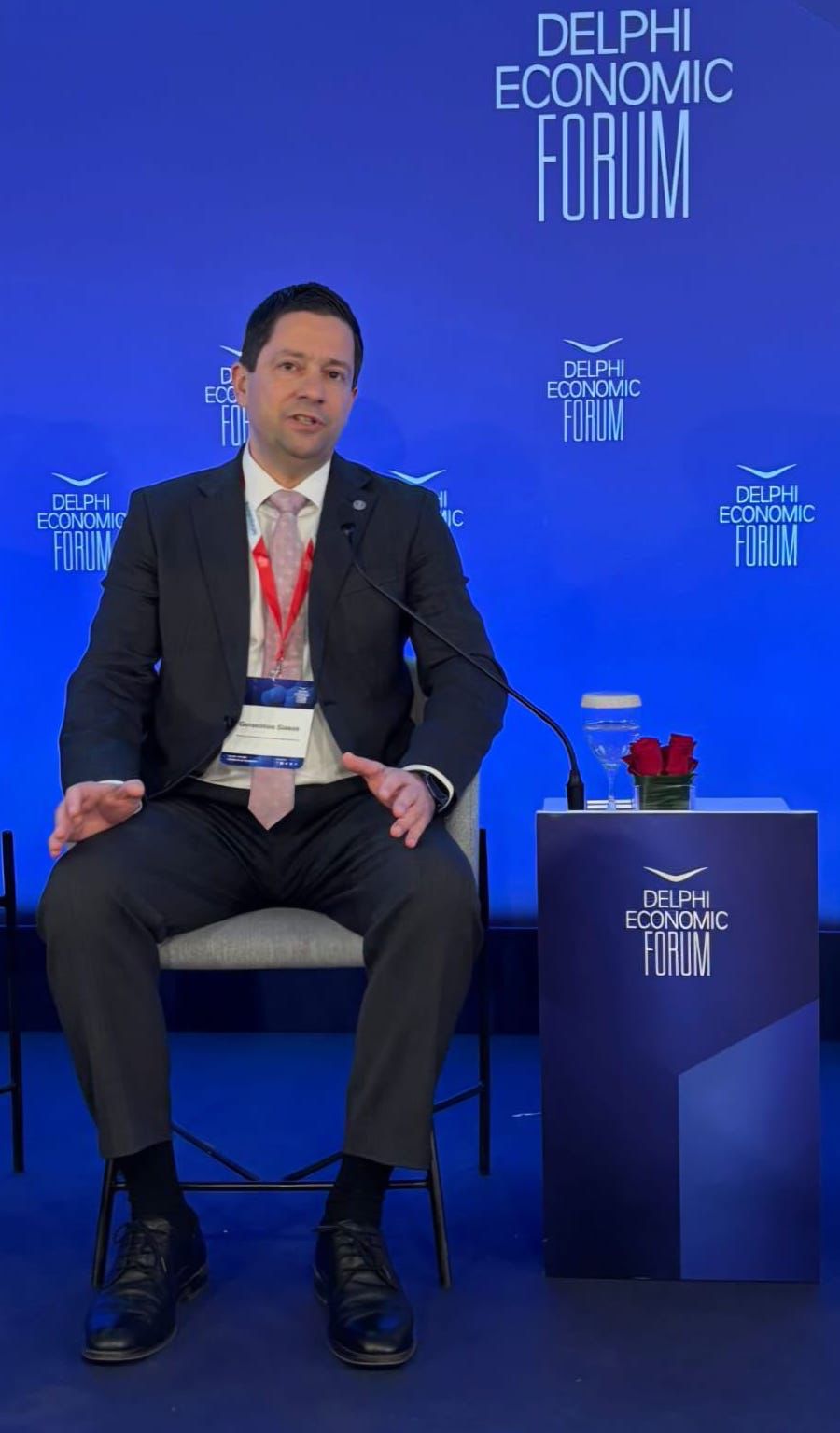
In his concluding remarks, Professor Siasos described PROLAMVANO as ‘a unique opportunity for Greece’, emphasising that it will generate comprehensive data on the prevalence of cardiovascular risk factors and their relationship to coronary artery disease. These findings, he noted, are expected to enhance cardiac care by enabling more targeted treatments and informing future prevention strategies.
![Complete Anatomy Training Session [October 7, 2026]](https://hub.uoa.gr/en/wp-content/uploads/2026/10/NKUA_Invite-for-Complete-Anatomy-Training-Session_page-0001-1-1024x604.jpg)


![‘Dialogues for Athens’ Conference Organised by TO VIMA Under the Auspices of the National and Kapodistrian University of Athens and the Municipality of Athens [6-7 October]](https://hub.uoa.gr/en/wp-content/uploads/2026/10/Untitled-Design2-1-1024x576-1.jpg)