
Announcements

Perspectives to Fight Viruses. The Example of Sars-CoV-2

Perspectives to Fight Viruses. The Example of Sars-CoV-2

By Costas Demetzos (Professor of Pharmaceutical Technology and Nanotechnology, NKUA), Panagiotis Vlamos (Professor, Ionian University) and Dimitrios Vlachakis (Assistan Professor, Agricultural University of Athens)

The article is available at the website of the Proceedings of the European Academy of Sciences and Arts, PEASA

Article Link: https://www.peasa.eu/perspectives-to-fight-viruses-the-example-of-sars-cov-2/

Abstract

Coronaviruses well studied in the past provide scientific tools and knowledge that is used for identifying the molecular basis of the new SARS-CoV-2. It belongs to complex systems and its evolution and mutations must be observed under the lens of the nonlinearity as it is far from the equilibrium conditions. The new properties that SARS-CoV-2 carries were incubated for a long time in microcosm refining its information content. Various animal species acted as transmitters of SARS-CoV-2 to human beings. In this perspective article, we argue that the infection ability of the new virus can correlate with its thermodynamic payload. Design: We suggest that by identifying the thermodynamic content and biophysical profile of the viruses’ proteins using a mathematical framework of nonlinear complex systems, we can simulate its molecular origin and design weapons for fighting it. We suggest discovering for artificial ‘decision-making’ nano-platforms that can decrypt the ‘crypted information code’ of viruses that permit their mutation process taking place not randomly but based on the self-assembly process of its nucleotides following the micro and macro environmental conditions. Main outcomes: Our proposition is to design nanoplatforms (decision making nanocarriers) that can carry thermodynamic variables that could interrupt the mutations, virulence, and proliferation. This approach is innovative and is a challenge that should be checked in the future. This concept needs generous funding by governments for supporting intelligence and innovative research projects. Mainly, we need solidarity between nations to shield the health of societies.

αρχείο λήψης

The authors of the article in their research conclusions state:

(…) our strong belief is that: virus attacks on the level of information. We should be ready to manage and quickly decode virus’s information and to develop as quickly as possible digital tools, protocols, and nano-platforms for therapeutic purposes to fight viruses. The governments and the nations should be sensitive and informed regarding such an ‘information war’.

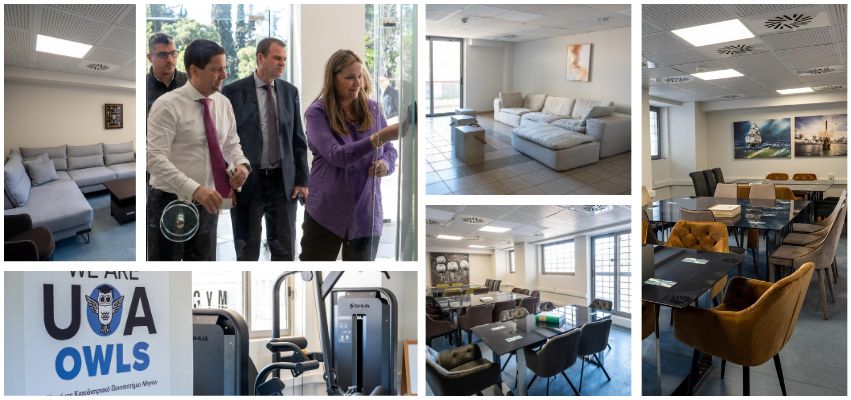
University of Athens Upgrades Student Halls of Residence – See the Before and After Photos

University of Athens Upgrades Student Halls of Residence – See the Before and After Photos

The University of Athens is carrying out a major upgrade programme of its student residences, aimed at improving living standards, strengthening safety measures, and enhancing students’ day-to-day experience. Working in partnership with the Youth and Lifelong Learning Foundation, the university has completed extensive refurbishment across the residences, restoring previously unused areas, carrying out major maintenance […]

Invitation to the opening ceremony of the International Interdisciplinary Conference titled: “Borders: Literary, Cultural and Political Dialogues”

Invitation to the opening ceremony of the International Interdisciplinary Conference titled: “Borders: Literary, Cultural and Political Dialogues”

The Rector of the National and Kapodistrian University of Athens Professor Gerasimos Siasos cordially invites you to the opening ceremony of the International Interdisciplinary Conference entitled: “Borders: Literary, Cultural and Political Dialogues” organized by the Department of English Language and Literature of the School of Philosophy of the University of Athens and the Hellenic Association […]

University of Athens Delegation Visits New York and Boston to Showcase Academic Programmes and Advance International Partnerships

University of Athens Delegation Visits New York and Boston to Showcase Academic Programmes and Advance International Partnerships

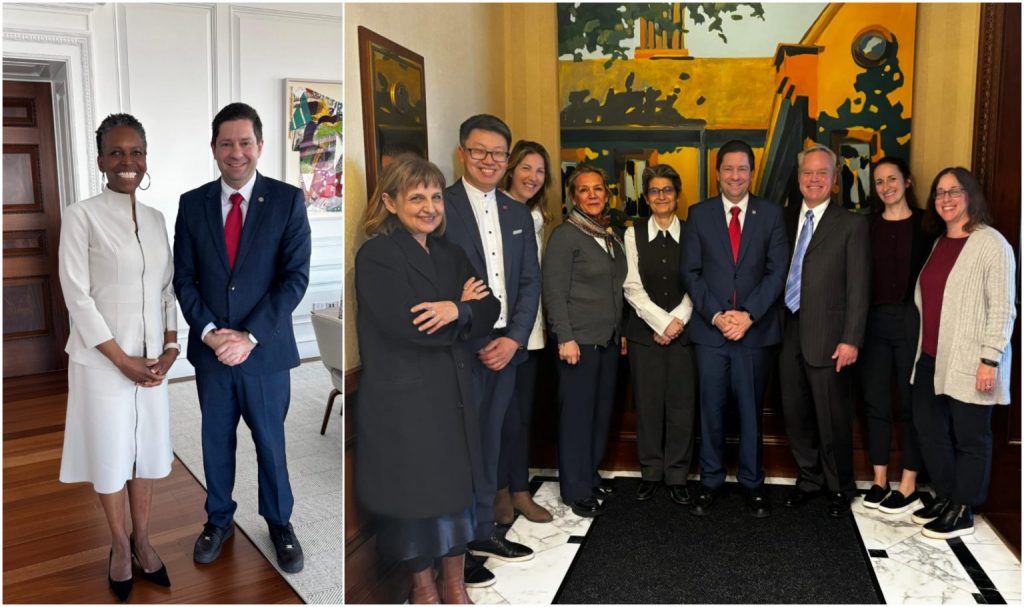
A delegation from the National and Kapodistrian University of Athens visited New York and Boston to present the full range of the institution’s undergraduate and postgraduate programmes, including provision at its branch in Cyprus. Particular emphasis was placed on academic programmes delivered in English. During the visit, they met with the Consul General of Greece […]

University of Athens Strengthens Strategic Partnership with Boston University – Rector Gerasimos Siasos Meets President Melissa Gilliam in Boston

University of Athens Strengthens Strategic Partnership with Boston University – Rector Gerasimos Siasos Meets President Melissa Gilliam in Boston

A delegation from the National and Kapodistrian University of Athens visited Boston University, where they met with senior leadership to further strengthen ties between the two institutions. The discussions reaffirmed a shared commitment to expanding academic and research collaboration in key strategic areas. The visit followed President Melissa Gilliam’s October 2025 trip to Athens with […]

Athens Medical School Leadership Re-elected with Strong Mandate

Athens Medical School Leadership Re-elected with Strong Mandate

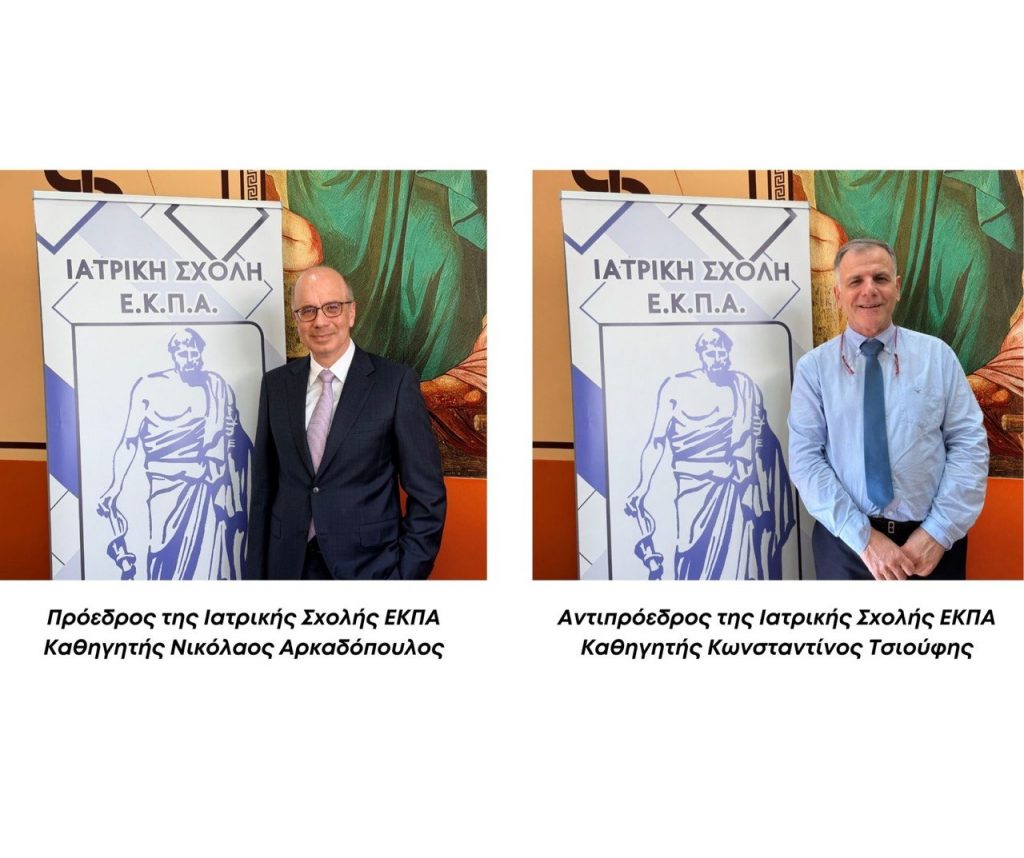
Professor of Surgery Nikos Arkadopoulos and Professor of Cardiology Kostas Tsioufis have been re-elected as Chair and Vice-Chair of the School of Medicine at the National and Kapodistrian University of Athens, securing over 95% of the vote in an election with a turnout of 94.1%, reflecting exceptionally high participation. The vote, cast by 600 faculty members, reaffirms strong confidence […]

University of Athens

The National and Kapodistrian University of Athens, which was inaugurated on May 3, 1837, was initially housed in a renovated Ottoman building on the northeastern side of the Acropolis. This building has since been restored and now functions as the University Museum. Originally named the "Othonian University," after Otto, the first king of Greece, it consisted of four academic departments and 52 students. As the first university of the newly established Greek state, as well as of the broader Balkan and Mediterranean region, it assumed an important socio-historical role, which was pivotal in the development of specific forms of knowledge and culture within the country.

Stay Connected

Follow hub.uoa.gr on Social Media

closebutton
Skip to content