Announcements

University of Athens Develops and Validates Online Tool to Measure Susceptibility to Misinformation from Fake News

University of Athens Develops and Validates Online Tool to Measure Susceptibility to Misinformation from Fake News

The National and Kapodistrian University of Athens has, for the first time internationally, developed a scale for measuring individuals’ susceptibility to misinformation from fake news.

Called the Online Misinformation Susceptibility Scale, it is the fruit of research by Associate Professor Petros Galanis, PhD candidate Aglaia Katsiroumpa, Assistant Professor Polyxeni Mangoulia, Laboratory Teaching Staff Olympia Konstantakopoulou, Assistant Professor Ioannis Moisoglou, and Assistant Professor Parisis Gallos. The paper has been published in the Healthcare journal (impact factor: 2.7) and can be accessed at doi.org/10.3390/healthcare13172252.

Both the Greek and English versions of the Online Misinformation Susceptibility Scale are freely available for use at http://scholar.uoa.gr/pegalan/online-misinformation-susceptibility-scale, complete with instructions and a scoring guide.

More specifically, the Laboratory of Clinical Epidemiology at the University of Athens’ Department of Nursing developed and validated the Online Misinformation Susceptibility Scale, the first international tool to evaluate how users interact with content across social media and the wider web—a crucial step towards promoting accurate information in the digital space. The Scale consists of just nine simple questions and takes only two minutes to complete.

It should be noted that the development and validation of the Online Misinformation Susceptibility Scale strictly followed all scientific steps as defined by research methodology for creating a reliable and valid tool. Specifically, the Scale demonstrates (a) high validity, meaning that it indeed measures levels of susceptibility to misinformation from fake news, and (b) high reliability, meaning that it produces consistent results across repeated measurements.

Fake news influences individuals and shapes how they perceive reality and make decisions. Psychological mechanisms such as cognitive biases, emotional reactions, and social identities make people more susceptible to misleading information. People often believe or share fake news because it triggers strong emotions, such as anger or fear. To make things worse, digital platform algorithms amplify these emotions by promoting sensational content that maximizes engagement. That can confuse people, distort their understanding of facts, reduce their trust in institutions and experts, and harm their mental well-being, as continuous exposure to misinformation increases anxiety and distrust towards others and the social environment in general.

In this context, the Online Misinformation Susceptibility Scale is of crucial importance, as it enables researchers and mental health professionals to assess an individual’s susceptibility to fake news. That helps identify those who are most vulnerable. Once we know who is more susceptible to misinformation, we can design educational programmes, awareness campaigns, and strategies to enhance critical thinking specifically for these individuals. For instance, we can use the Scale before and after an educational intervention to evaluate whether susceptibility to misinformation has decreased. Additionally, individuals who understand their own level of susceptibility can become more cautious, develop information verification skills, and reduce the risk of making erroneous decisions in areas such as health, politics, or personal safety.

Click the link below to check, in just two minutes, your level of exposure to misinformation from fake news on social media and the wider web by using the Online Misinformation Susceptibility Scale:

https://chesme.limesurvey.net/739755?lang=el&newtest=Y

Alternatively, you can scan the QR Code below:
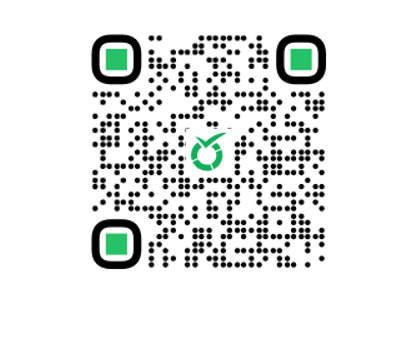
QR

CardioAthena 2026 Launches ‘Heartworks: The Heart Through Art and Artificial Intelligence’ 3-4 April 2026, Divani Caravel Hotel, Athens

CardioAthena 2026 Launches ‘Heartworks: The Heart Through Art and Artificial Intelligence’ 3-4 April 2026, Divani Caravel Hotel, Athens

The 1st Department of Cardiology at the University of Athens’ School of Medicine, based at Hippocratio General Hospital, is proud to host CardioAthena 2026—the 22nd International Meeting on Cardiovascular Medicine. Alongside the conference, the Organising Committee is inviting students of the National and Kapodistrian University of Athens to take part in ‘Heartworks: The Heart Through Art and […]

LSE Athens Lecture Series Continues with Strong Attendance

LSE Athens Lecture Series Continues with Strong Attendance

The second lecture of the LSE Athens Lecture Series 2025–2026, organised by the London School of Economics and Political Science (LSE) in collaboration with the National and Kapodistrian University of Athens, the Department of Business Administration, and the MSc Financial Technology (FinTech) programme, attracted a lively and engaged audience. The event was held on Friday, […]

Master programme “LL.M. in International and European Legal Studies” by Law School of NKUA (Academic Year 2026-27)

Master programme “LL.M. in International and European Legal Studies” by Law School of NKUA (Academic Year 2026-27)

During the academic year 2026-2027, the Law School of National and Kapodistrian University of Athens will offer an intensive LL.M. Programme in International & European Legal Studies. Description The LL.M. Programme in International and European Legal Studies (IELS) provides students with an advanced and in-depth study in the European and international aspects of private law, […]

META-TOO: A Multidisciplinary Alliance Against Harassment in the Metaverse

META-TOO: A Multidisciplinary Alliance Against Harassment in the Metaverse

META-TOO (A transfer of knowledge and technology for investigating gender-based inappropriate social interactions in the Metaverse) as a WIDERA project aims in strengthening NKUA’s research excellence and management capacity by enhancing staff knowledge and skills, elevating its profile in Metaverse research, and fostering sustainable research and innovation partnerships that expand its collaborative network. META-TOO, as […]

University of Athens Presents Annual Faculty Awards for 2024-2025

University of Athens Presents Annual Faculty Awards for 2024-2025

The National and Kapodistrian University of Athens held its now firmly established and highly symbolic Annual Faculty Awards Ceremony on Wednesday, 25 February 2026, at 18:00, in the filled-to-capacity Great Hall of the University’s Main Building. The awards recognized achievement across three categories: Outstanding Contribution to the University and Society, Outstanding Teaching, and Excellence in […]

Springer Nature Releases Spyridon Vlachopoulos’s Book ‘Political Correctness as Modern Censorship? From Legal to Political Correctness and to the Boundaries of Intellectual Expression’ in Open Access

Springer Nature Releases Spyridon Vlachopoulos’s Book ‘Political Correctness as Modern Censorship? From Legal to Political Correctness and to the Boundaries of Intellectual Expression’ in Open Access

Spyridon Vlachopoulos, Professor and member of the Administration Council at the National and Kapodistrian University of Athens, has recently published his book ‘Political Correctness as Modern Censorship? From Legal to Political Correctness and to the Boundaries of Intellectual Expression’ with Springer Nature on an open access basis. According to the publisher, the book examines the […]

Athens and Belgrade Medical Schools Sign a Memorandum of Understanding in the Presence of Serbia’s Prime Minister, Djuro Macut, and Rector, Gerasimos Siasos

Athens and Belgrade Medical Schools Sign a Memorandum of Understanding in the Presence of Serbia’s Prime Minister, Djuro Macut, and Rector, Gerasimos Siasos

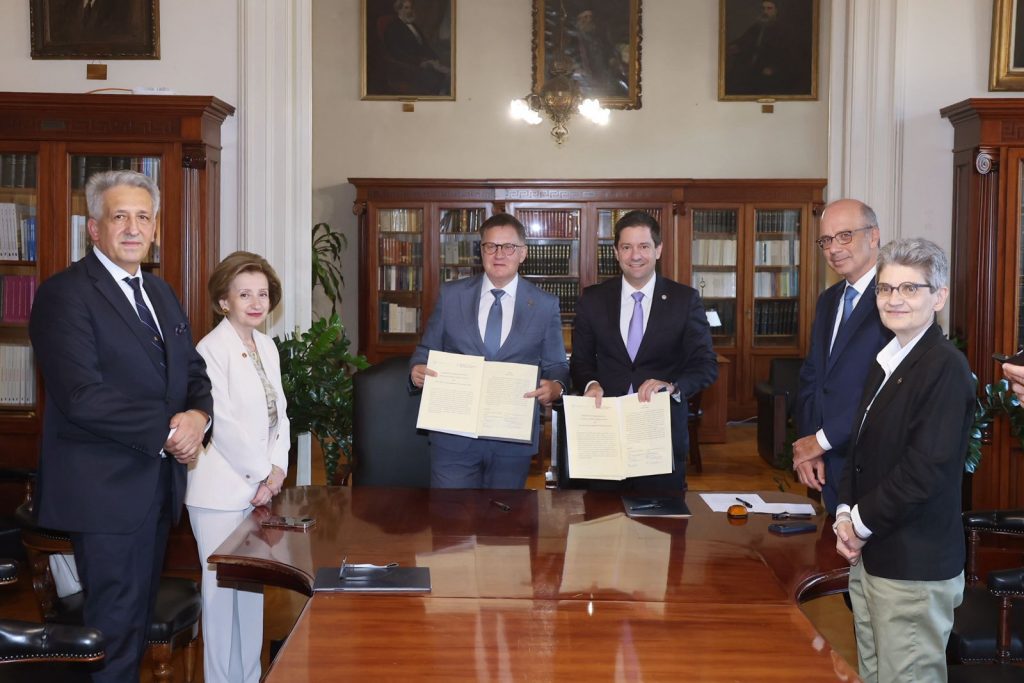
The School of Medicine at the National and Kapodistrian University of Athens and the Faculty of Medicine at the University of Belgrade signed a Memorandum of Understanding (MoU) on Tuesday, 17 February 2026, in a ceremony attended by Serbia’s Prime Minister, Djuro Macut, and the Rector of the University of Athens, Gerasimos Siasos. Professor Macut, […]

University of Athens School of Medicine: Free Obesity Programme Now Available at Clinical Departments through the State ‘Prolamvano’ Initiative

University of Athens School of Medicine: Free Obesity Programme Now Available at Clinical Departments through the State ‘Prolamvano’ Initiative

Obesity is one of the most significant modifiable risk factors for cardiometabolic and cardiovascular disease. The ‘Prolamvano’ programme is a structured public health initiative overseen by the Greek Ministry of Health, clearly showing that prevention works when there is coordinated planning and support from the State and healthcare professionals. Through a unified referral and record-keeping […]

Simulation Laboratory Launches at the University of Athens School of Medicine

Simulation Laboratory Launches at the University of Athens School of Medicine

On 9 February 2026, the University of Athens School of Medicine reached a historic milestone with the launch of its Clinical Simulation Programme, held at the Physiology Laboratory’s Simulation Centre. Part of the Internal Medicine clinical practice curriculum, the programme brings together all eight Departments of Internal Medicine at the School—including the Department of Therapeutics, […]

University of Athens School of Health Sciences Honours Greece’s Alternate Minister of Health, Eirini Agapidaki

University of Athens School of Health Sciences Honours Greece’s Alternate Minister of Health, Eirini Agapidaki

In recognition of her outstanding contributions to public health and society, Greece’s Alternate Minister of Health, Eirini Agapidaki—a graduate of the National and Kapodistrian University of Athens—was presented with an honorary award by the School of Health Sciences. The award highlights her achievements in healthcare and prevention, as well as the lasting social impact of […]

University of Athens

The National and Kapodistrian University of Athens, which was inaugurated on May 3, 1837, was initially housed in a renovated Ottoman building on the northeastern side of the Acropolis. This building has since been restored and now functions as the University Museum. Originally named the "Othonian University," after Otto, the first king of Greece, it consisted of four academic departments and 52 students. As the first university of the newly established Greek state, as well as of the broader Balkan and Mediterranean region, it assumed an important socio-historical role, which was pivotal in the development of specific forms of knowledge and culture within the country.

Stay Connected

Follow hub.uoa.gr on Social Media

closebutton
Skip to content