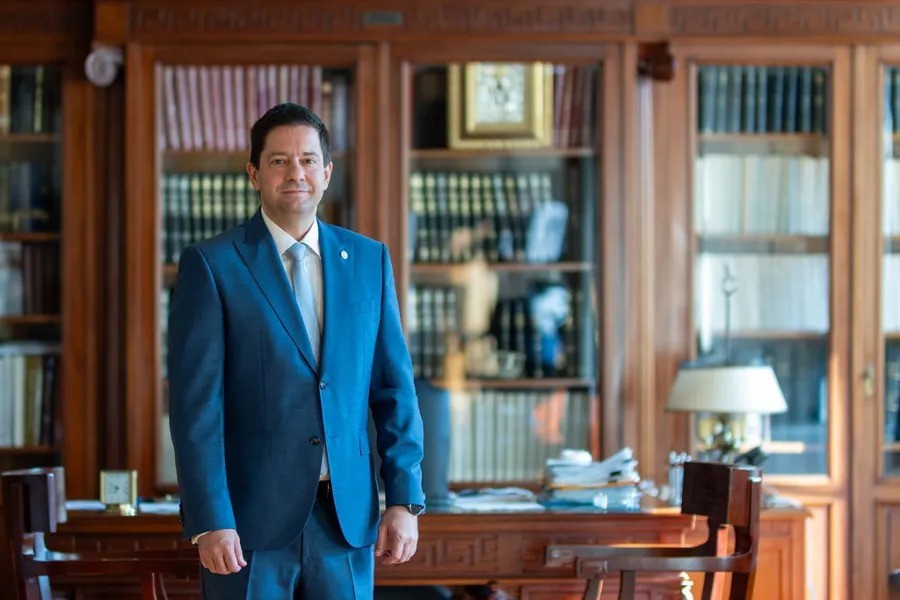
An article by Michalis Gr. Vrachopoulos, Emeritus Professor at the National and Kapodistrian University of Athens (NKUA), on the utilization of energy currently being wasted at the TAP compressor station in Kipi, Evros, has been published in the Gnomi of Evros newspaper.
Read the article
There are times when development is being held back not by a lack of resources, but by a lack of political will. And at such times, one cannot help but ask, with a sense of frustration: what, ultimately, is the true cost of inaction?
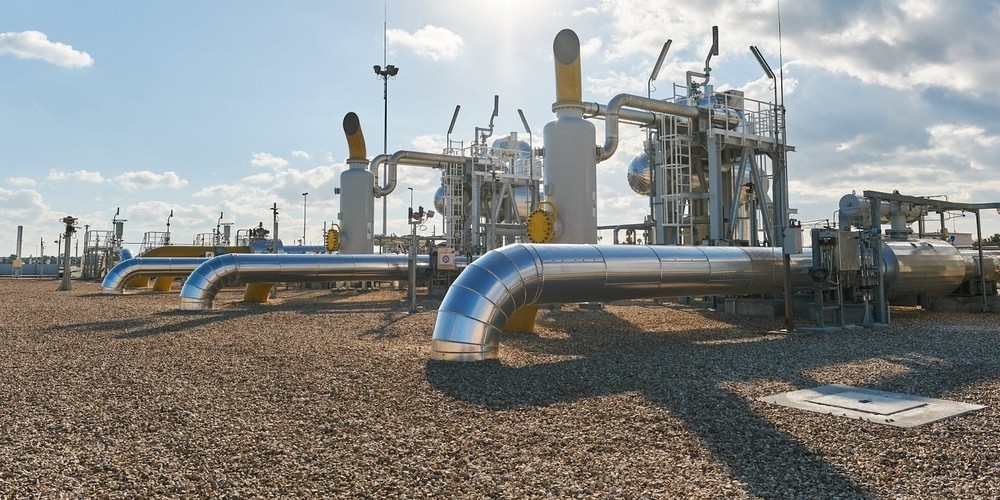
Just a few kilometres outside Alexandroupolis, the compressor station of the Trans Adriatic Pipeline (TAP) operates almost continuously.
Alongside it operates an invisible “industry” of waste: tens of megawatts of thermal energy are discharged into the atmosphere every day.
At the same time, citizens pay dearly for heating, farmers see energy costs eroding their competitiveness, businesses struggle to invest, and the Greek state seeks ways to strengthen regional development.
The question is simple: how can we be searching for energy while allowing energy that we already have to go to waste?
The waste heat generated by the TAP compressor station is not merely a theoretical scientific proposition. It is a real energy resource, capable of supplying district heating, generating electricity, serving greenhouses and refrigerated storage facilities for agricultural produce, and supporting new industrial processing activities.
At this point, and in an attempt to provide a concise scientific analysis, I would like to highlight several distinctive characteristics of the heat available from this particular installation.
The most important of these is the facility’s near-continuous operation, which produces waste heat at particularly high temperatures. Specifically, the temperature of the discharged heat reaches 122°C, making it suitable for a wide range of applications.
At these temperature levels, and with flow rates approaching 496 tonnes per hour, the available energy could potentially deliver approximately 33 MW of thermal power—an enormous resource in relation to the area’s needs for heating, summer cooling and agricultural applications.
It is highly likely that this energy could never be fully absorbed by the local community alone, primarily because of the area’s population size and the scale of its existing professional and economic activities. Modern technology, however, offers many additional possibilities that could benefit the entire population, while also providing ideal solutions for publicly funded schemes that could be implemented at no cost to beneficiaries.
More specifically, if the heat available at these temperature levels were divided between different applications, approximately 18 MW could be allocated to electricity generation, at an efficiency of around 15%. This would produce approximately 2.8 MW of electricity, while the remaining 14.5 MW of thermal energy could be used to meet heating and cooling requirements.
Such a solution could make electricity available at minimal cost to the residents of the Municipality of Alexandroupolis, while also meeting the area’s thermal energy needs and creating opportunities for the development of agro-industrial activities.
In other words, it could support the development of productive greenhouses, cold-storage facilities for agricultural produce, and other thermal processes associated with the agricultural sector.
Beyond its other benefits, this solution is also of strategic importance. It would enable productive facilities capable of generating added value and attracting population to be established in a sensitive border region.
A preliminary assessment of the financial figures suggests that electricity generation could yield annual revenues corresponding to approximately 14.5 million kilowatt-hours of electricity (kWhₑₗ), valued at around €2 million. Similarly, full utilisation of the available thermal energy could provide approximately 76 million kilowatt-hours of heat (kWhₜₕ), also valued at around €2 million.
(Explanation of symbols: kWhₑₗ = kilowatt-hours of electricity; kWhₜₕ = kilowatt-hours of thermal energy.)
The overall investment required for such an installation is, of course, substantial. In general, the cost of district heating infrastructure has previously been estimated at approximately €32 million, while the construction of an electricity generation plant is estimated to cost a further €6–7 million.
At first glance, the undertaking may not appear particularly attractive, if we assume that the project’s annual operating costs would amount to approximately €0.7–1 million and that the payback period would be close to 20 years.
However, if we also take into account the wider benefits arising from savings in heating costs for residential communities and agro-industrial facilities—estimated at approximately €4 million per year—the overall picture becomes exceptionally attractive. The effective payback period for the entire project would then be reduced to just seven years, while simultaneously delivering significant economic development to the region, as outlined above.
It is worth noting that the energy available from the aforementioned installation is many times greater than that of the neighbouring geothermal field near the settlement of Aristino. Yet today, this energy is simply discharged into the environment, with all the associated consequences.
In other words, this is not merely about saving energy.
It is about creating wealth.
At a time when Europe is investing in the circular economy and the utilisation of every available energy resource, Greece continues to treat waste heat as waste!
And yet, this heat could become an instrument of social policy.
It could reduce heating costs for households.
It could support local farmers.
It could create a new productive ecosystem centred on agri-food industries.
It could attract investment and create new jobs in a border region that needs population growth, economic activity and a future.
Energy policy should not be measured solely in terms of pipelines, major investments and geopolitical strategies. It should also be measured by the extent to which local communities benefit from the value generated in their own territory.
This is perhaps the most important question raised by the TAP case:
Who reaps the added value of such a major energy infrastructure project?
The local community, or merely the figures in corporate balance sheets?
The utilisation of waste heat is not simply a technical project. It represents a different philosophy of development. It reflects the understanding that major infrastructure projects cannot operate in isolation from the communities that host them.
Alexandroupolis now has a unique opportunity to evolve into an international energy hub.
The real challenge, however, is not merely to transport energy to Europe.
It is to transform energy into prosperity for its people.
Because the greatest loss is not the heat that escapes into the atmosphere.
The greatest loss is the opportunities we allow to slip away.
Should not every major energy investment established in Greece be required to return a share of the value it generates to the local community?
Perhaps, this is the true meaning of sustainable development”.
#Alexandroupolis_Energy_Hub
#Thrace
#GreatEnergyParadox
Professor Emeritus, National and Kapodistrian University of Athens (NKUA)
Dr. Michalis Gr. Vrachopoulos is Professor Emeritus of the National and Kapodistrian University of Athens (NKUA), with many years of academic and research experience in the fields of energy, renewable energy sources, geothermal energy, and the energy utilisation of natural resources.
He has directed research projects of European scope, authored scientific books, and contributed to the development of energy solutions for municipalities and public institutions throughout Greece.
Beyond his academic career, however, Michalis Vrachopoulos has chosen to bring science into the public debate. Through evidence-based analysis, candour and a strong sense of responsibility, he engages with issues concerning society, regional development and the management of public wealth.
He does not hesitate to highlight missed opportunities, challenge long-standing delays and put forward realistic proposals whenever he finds that the necessary knowledge exists, but the political will is lacking.
For him, science does not end in the laboratory or on the pages of a study. It acquires its true value when it serves people, strengthens local communities and transforms knowledge into development, opportunity and quality of life.