
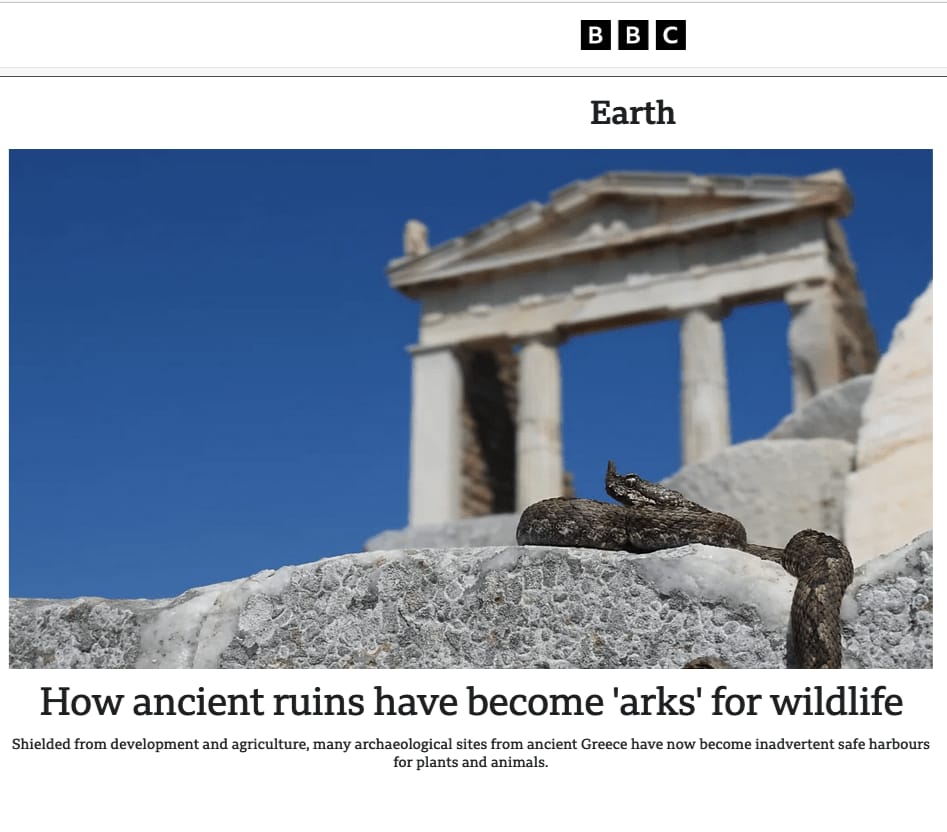
On Thursday, January 8, 2026, a feature article was published on the BBC website about the project ‘Biodiversity and Archaeological Sites’ (BIAS). The extensive text highlights the unique role of archaeological sites as ‘harbours’ of biodiversity. These sites have remained unchanged for many decades, and their natural environment has been preserved, making them hospitable to many species of flora and fauna and underscoring their importance in biodiversity conservation. The conclusion, drawn from the results of BIAS as well as similar studies from Peru and Italy, is also presented in the article.
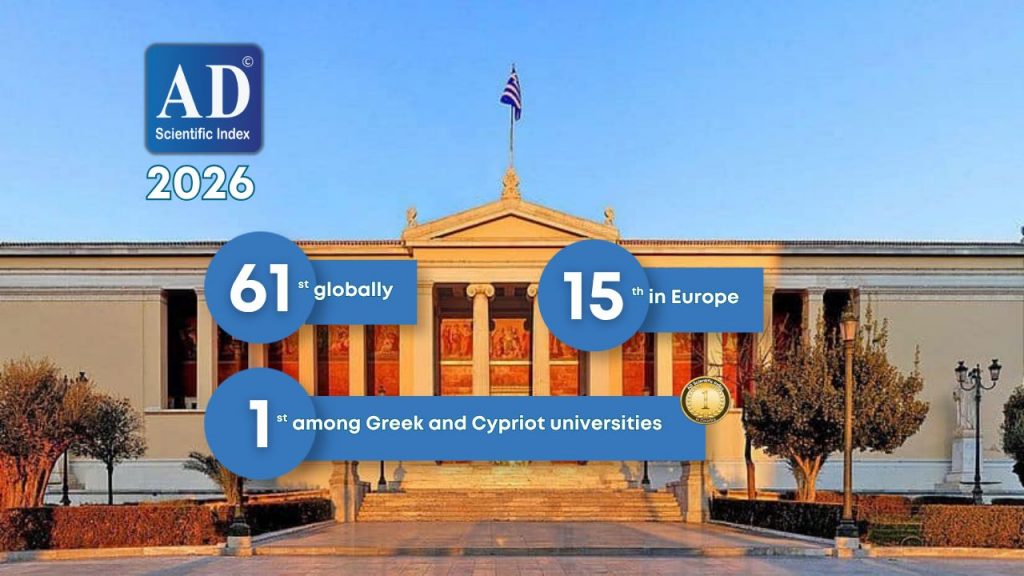
The BIAS project was launched by the Greek Minister of Culture, Ms Lina Mendoni, and was supported by the Ministry of Culture and the Ministry of Environment and Energy (Minister of Environment and Energy, Mr Stavros N Papastavrou), while it was funded by the Natural Environment and Climate Change Agency. The project’s contractor was the National and Kapodistrian University of Athens, which, for the implementation of the project, collaborated with researchers from eight other Universities and Research Foundations (Aristotle University of Thessaloniki, Agricultural University of Athens, University of Patras, University of Ioannina, Democritus University of Thrace, Natural History Museum of Crete – University of Crete, Mediterranean Agronomic Institute of Chania, Hellenic Centre for Marine Research). As part of BIAS, 49 researchers across all specialties in zoology and botany conducted fieldwork in 20 iconic archaeological sites selected by the Ministry of Culture. Some of these sites are UNESCO World Heritage Sites, while others fall within Natura 2000 network areas, and in three cases (Delphi, Meteora, and Olympia), both designations apply. A total of 526 fieldwork days and 90 laboratory analysis days were conducted.
In the 20 archaeological sites, a total of 4,403 species of animals and plants were recorded. Thus, the particular value of archaeological sites in terms of their biodiversity is clearly revealed. The BBC article particularly emphasizes that although these 20 sites occupy only 0.08% of Greece’s land area, they host about 11% of the country’s flora and fauna. According to the author of the article, Elizabeth Hewitt, in times when biodiversity is declining rapidly worldwide, modern research shows how deeply nature is integrated into cultural sites, and that preserving these historical places can also help protect rare species.
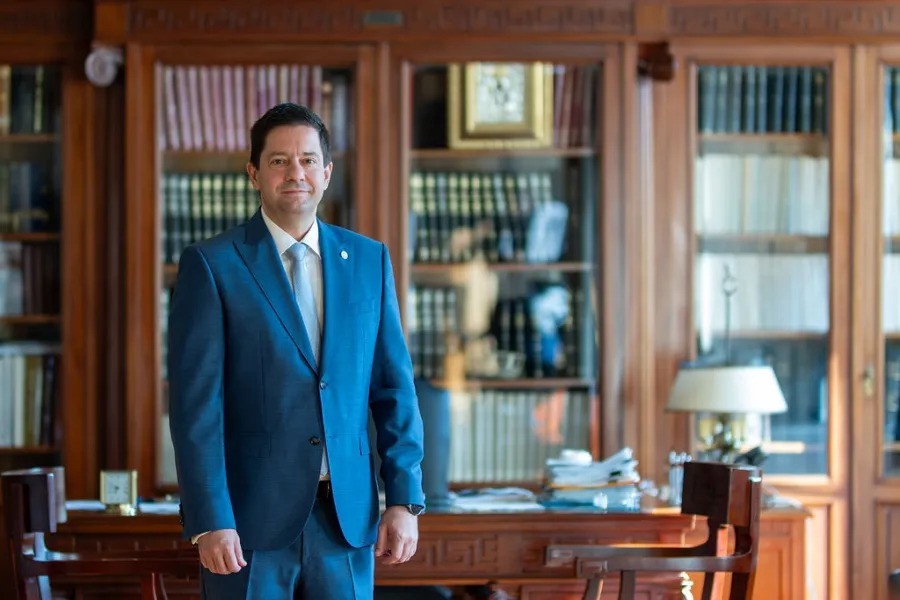
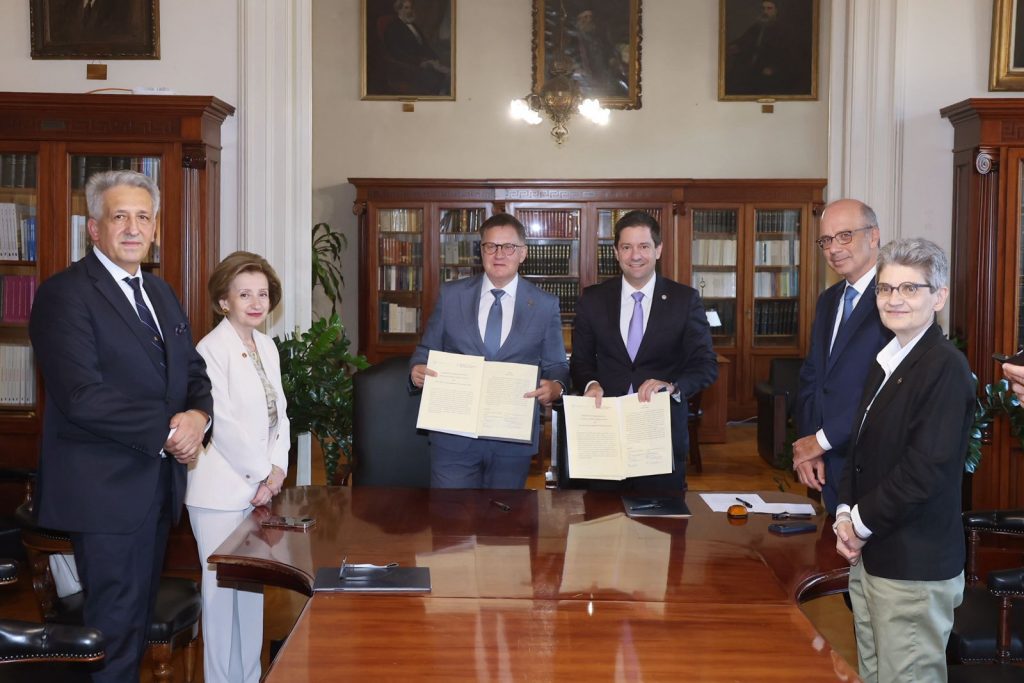
In October 2025, the Minister of Culture, Ms Lina Mendoni, the Minister of Environment and Energy, Mr Stavros N. Papastavrou, the Rector of the National and Kapodistrian University of Athens, Professor Gerasimos Siasos, the Director of the National Hellenic Research Foundation, Professor Dimosthenis Sarigiannis, and the Chief Executive Officer of the Natural Environment and Climate Change Agency, Professor Konstantinos Triantis, signed a programme contract for the extension of the project to 35 additional archaeological sites. The implementation of the new project was entrusted to the Department of Biology of the National and Kapodistrian University of Athens, with Scientific Responsible Professor Panayiotis Pafilis. BIAS II continues the globally innovative approach, combining the recording of biodiversity with the study of historical, archaeological, and philological sources. The first phase of the project has already been completed, and fieldwork will begin in February 2026.
Link to the original article: https://www.bbc.com/future/article/20260107-the-ancient-greek-ruins-harbouring-rare-animals
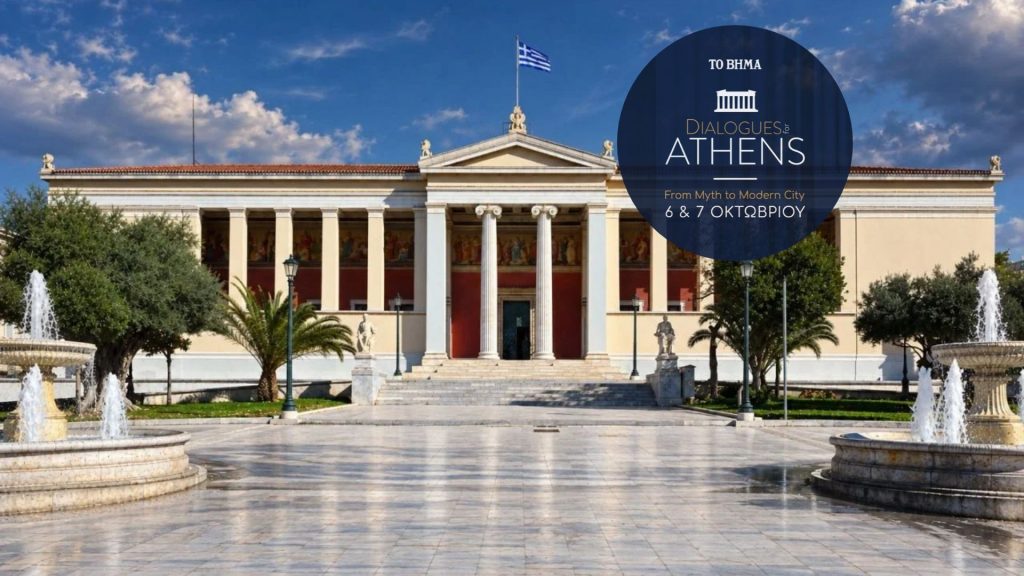
![Complete Anatomy Training Session [October 7, 2026]](https://hub.uoa.gr/en/wp-content/uploads/2026/10/NKUA_Invite-for-Complete-Anatomy-Training-Session_page-0001-1-1024x604.jpg)
![‘Dialogues for Athens’ Conference Organised by TO VIMA Under the Auspices of the National and Kapodistrian University of Athens and the Municipality of Athens [6-7 October]](https://hub.uoa.gr/en/wp-content/uploads/2026/10/Untitled-Design2-1-1024x576-1.jpg)