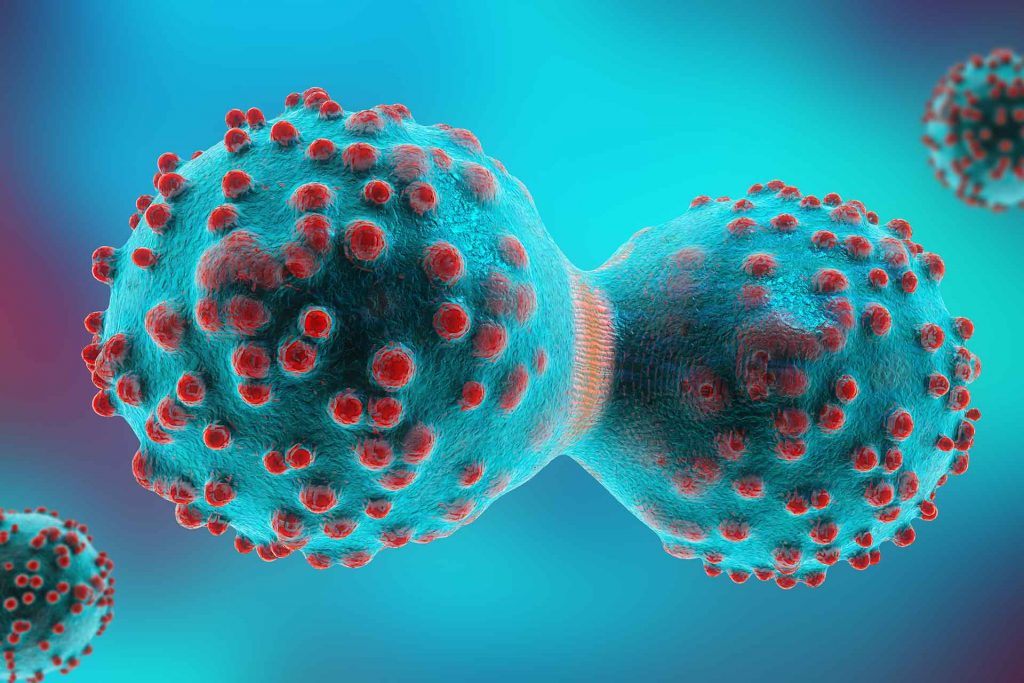
Professor Vassilis Gorgoulis of the Laboratory of Histology-Embryology at the Medical School of the National and Kapodistrian University of Athens, together with his collaborators, has published a recent paper in the prestigious, high-impact journal Molecular Cancer. The study decodes for the first time the role of cellular senescence in the dysfunction of the immune cells within the tumour microenvironment and in the responsiveness to immunotherapy in melanoma patients.
Immunotherapy is increasingly being used across a growing spectrum of cancers and is considered the first-line treatment for this type of malignancy.
More specifically, the authors implemented a pioneering senescence molecular signature (SeneVick), in combination with innovative senescence detection reagents they generated (GLF16), to demonstrate that melanoma patients who did not respond to immunotherapy exhibit increased immunosenescence compared to responders.
Notably, for the first time, they revealed that cellular senescence constitutes the dominant mechanism of immune system suppression in the tumour microenvironment (surpassing other mechanisms such as anergy and exhaustion), as confirmed by tests, since it renders immune cells dysfunctional and unable to eliminate cancer cells.
The study opens new avenues in cancer treatment by demonstrating that immune cell senescence drives responsiveness to immunotherapy and should therefore be assessed to predict treatment outcomes and stratify patients accordingly.






![Complete Anatomy Training Session [October 7, 2026]](https://hub.uoa.gr/en/wp-content/uploads/2026/10/NKUA_Invite-for-Complete-Anatomy-Training-Session_page-0001-1-1024x604.jpg)