An article written by
Maria Petropoulou, Assistant Professor, Department of Physics
Despina Hatzidimitriou, Professor, President of HeL.A.S., Department of Physics
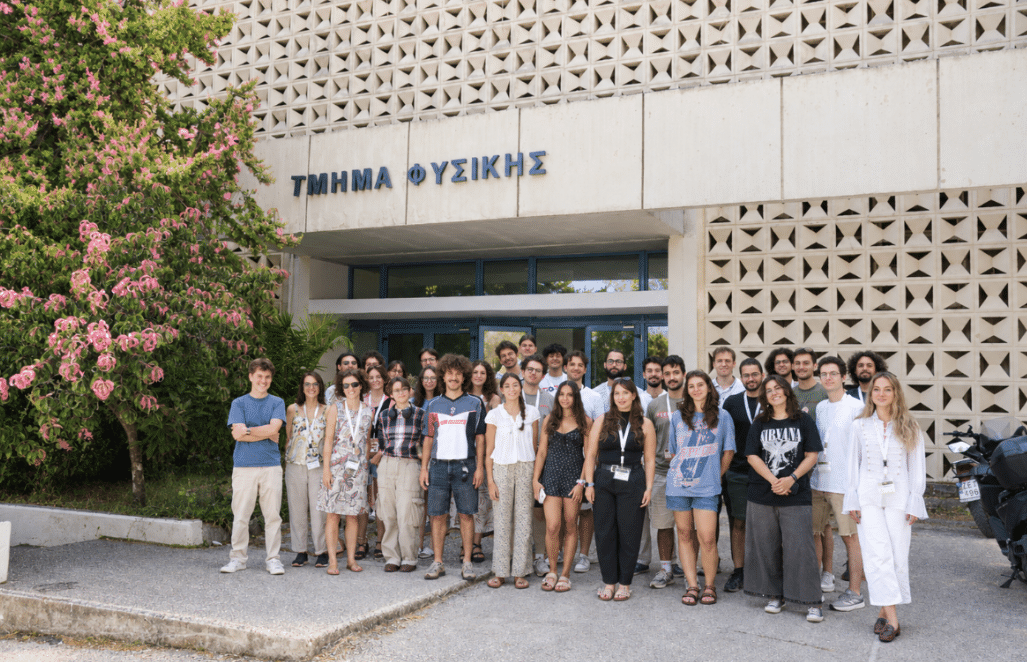
Thirty students and junior researchers attended in person, with an additional ten participating remotely, in an intensive five-day programme bringing together leading Greek and international researchers in astrophysics and astroparticle physics.
The National and Kapodistrian University of Athens (NKUA) hosted an international summer school on Multi-Messenger Astronomy from 24 to 28 August 2026, organised by the Hellenic Astronomical Society (HeL.A.S.). The school took place at the Department of Physics in the Zografou University Campus, bringing together leading Greek and international researchers in theoretical and experimental astrophysics and astroparticle physics to deliver a series of lectures and practical sessions on some of the most exciting developments in modern astronomy.
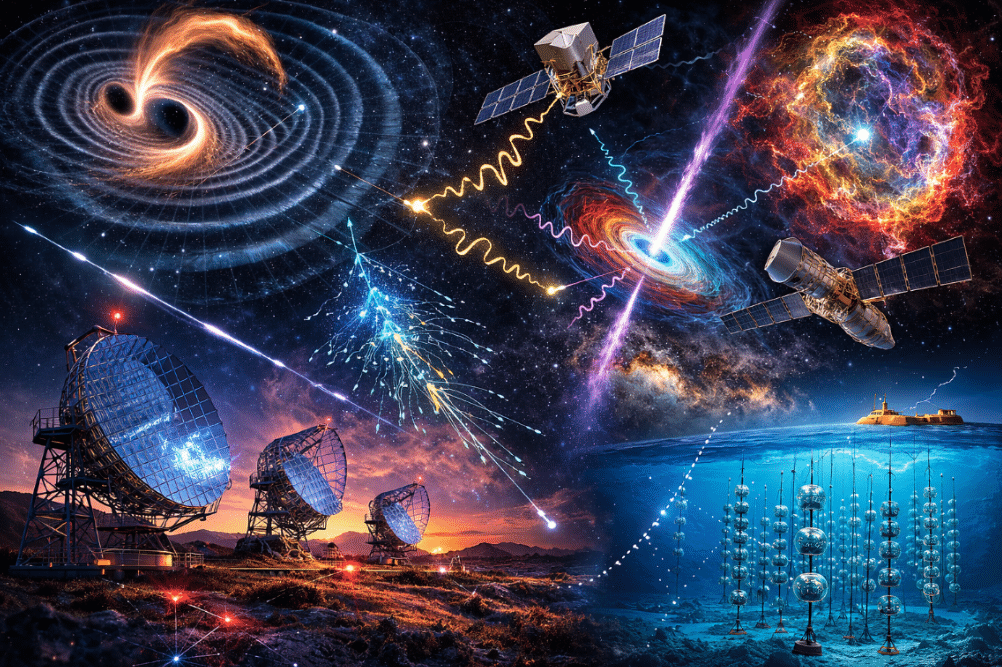
Multi-messenger astronomy is a rapidly developing field that combines information from different cosmic messengers (gravitational waves, cosmic rays, neutrinos, and electromagnetic radiation) to investigate some of the Universe’s most energetic and enigmatic phenomena. The summer school covered a broad range of topics, including gravitational waves; cosmic rays at low and ultra-high energies; astrophysical neutrinos from the theoretical and experimental perspectives; gamma-ray astronomy; X-ray astronomy; and applications of machine learning and deep learning in astrophysical research.
Lectures were delivered by ten scientists from leading universities and research institutions in Greece, Germany, France, Norway, and the United States:
- Sara Buson (University of Würzburg/DESY Zeuthen, Germany)
- Matteo Cerruti (APC University Paris Cite, France)
- Maria Gerontidou (National and Kapodistrian University of Athens, Greece)
- Nikolaos Karnesis (National Observatory of Athens, Greece)
- Foteini Oikonomou (Norwegian University of Science and Technology, Norway)
- Maria Petropoulou (National and Kapodistrian University of Athens, Greece)
- Niharika Sravan (Drexel University, USA)
- Stamatios I. Stathopoulos (DESY, Zeuthen)
- Ekaterini Tzamariudaki (NCSR Demokritos, Greece)
- Georgios Vasilopoulos (National and Kapodistrian University of Athens, Greece)
The summer school attracted 30 students attending in person and a further 10 participating remotely, with participants from Greece, Italy, India, Turkey, Germany, Poland, the United States, and the United Kingdom. This strong international participation reflects the growing interest in multi-messenger astrophysics and makes the school a significant opportunity for scientific exchange and collaboration among early-career researchers from diverse backgrounds.
In addition to the theoretical lectures, the programme included afternoon hands-on sessions in the Department of Physics computer laboratory, giving students the opportunity to apply the concepts and methods discussed during the lectures. Teaching materials and laboratory exercises will remain available on the summer school’s webpage.
Participants also had the opportunity to visit the Neutron Monitor Station at the Department of Physics. Dedicated sessions were organised for MSc and PhD students to present their own research through oral presentations, encouraging scientific discussion and providing opportunities to exchange ideas with established researchers and fellow students.
The summer school was organised by HeL.A.S., which continues to support advanced scientific training through bi-annual summer schools that make specialised education accessible to young researchers. In keeping with this commitment, participation was offered free of registration fees, with coffee breaks and lunches also provided to all participants.
The organisation of the school was made possible through the financial support of the National and Kapodistrian University of Athens, the Academy of Athens, and the National Observatory of Athens. The Department of Physics of NKUA contributed by providing the lecture halls and computer laboratory, which had been renovated to support the educational activities.
By combining advanced lectures, practical training, student presentations, and international networking, the summer school offered participants a comprehensive introduction to the methods and scientific challenges of multi-messenger astronomy. It also strengthened connections between Greek and international research communities, reinforcing the role of NKUA as a meeting point for scientific education and collaboration in contemporary astrophysics.
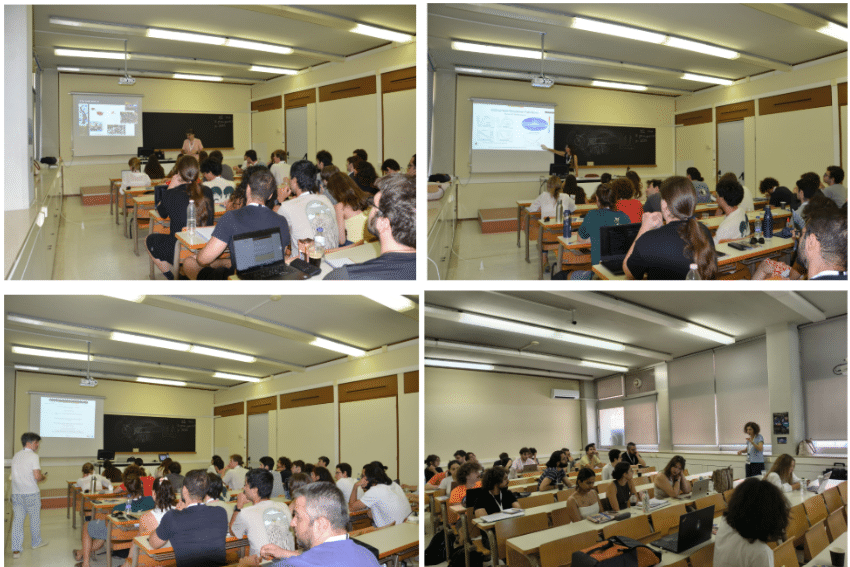
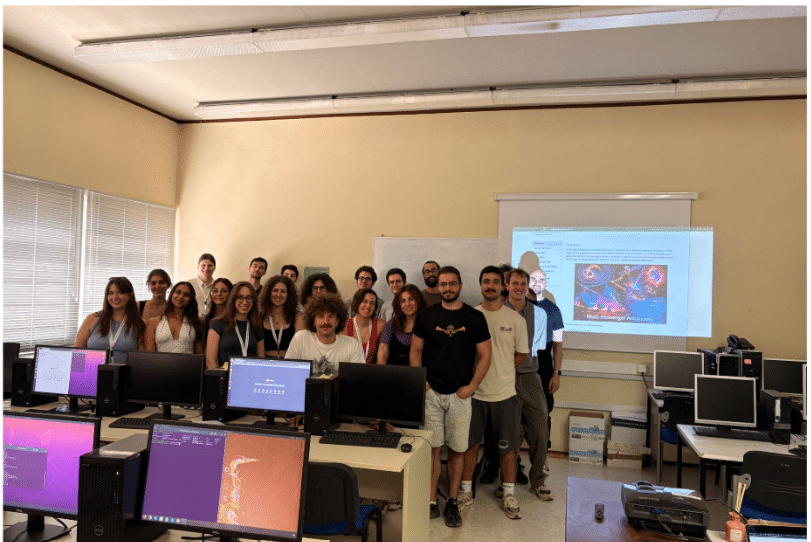
Photos from the lecture and lab rooms.
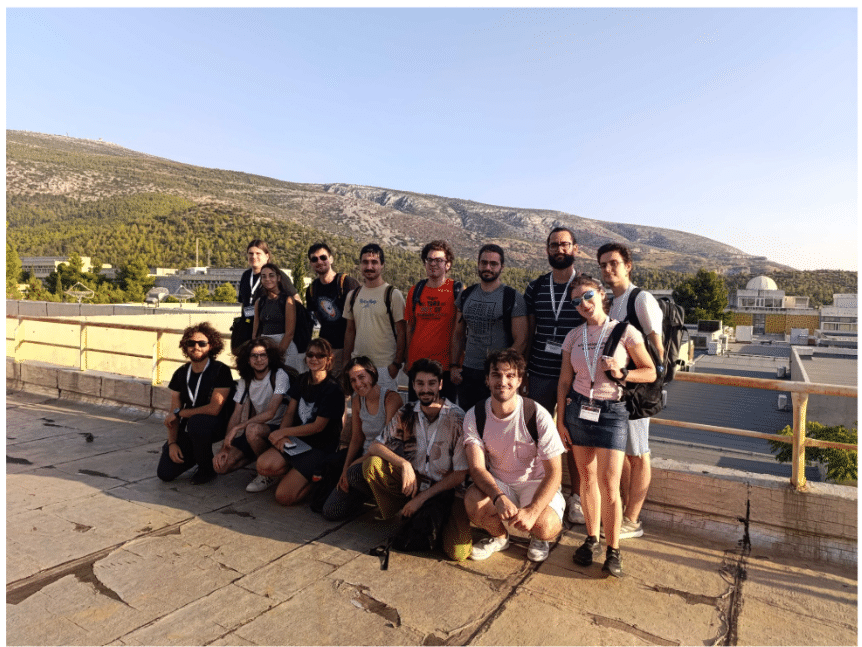
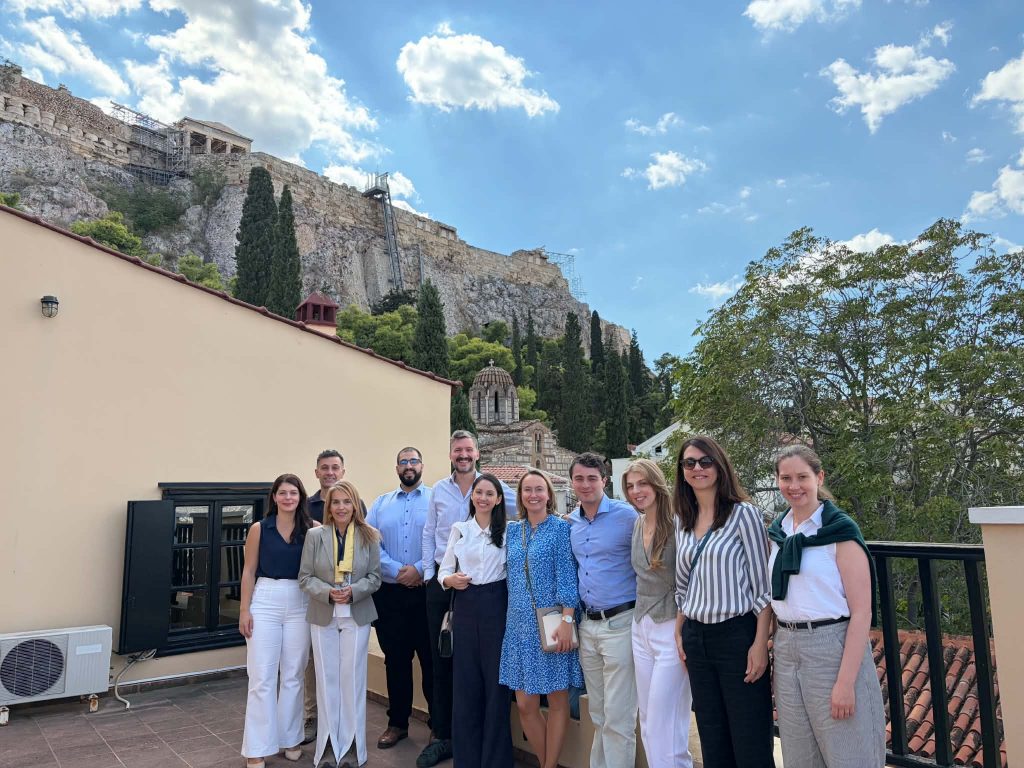
Photo from the Physics Building after the visit of a group of students to the Neutron Monitor Station.