
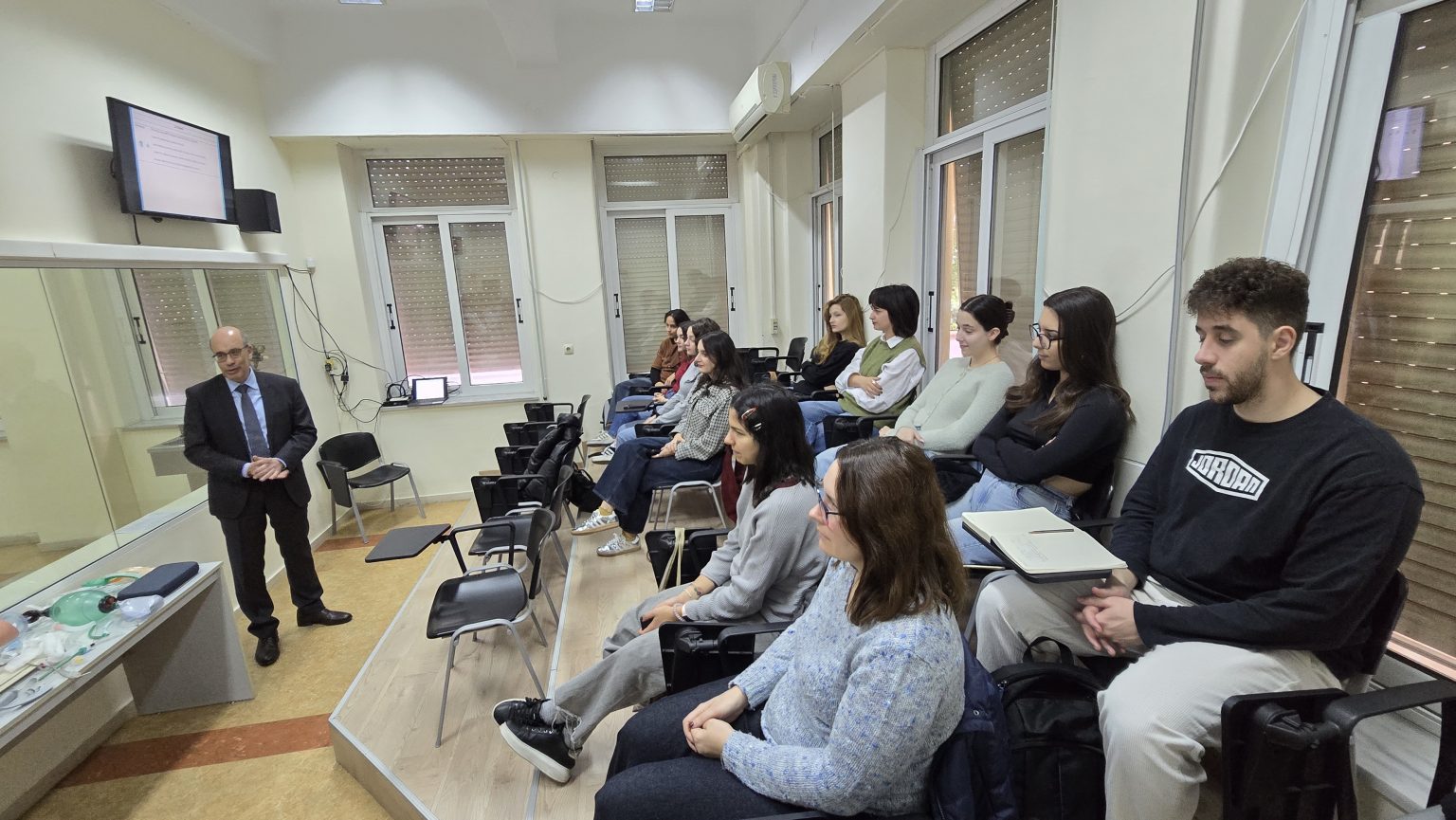
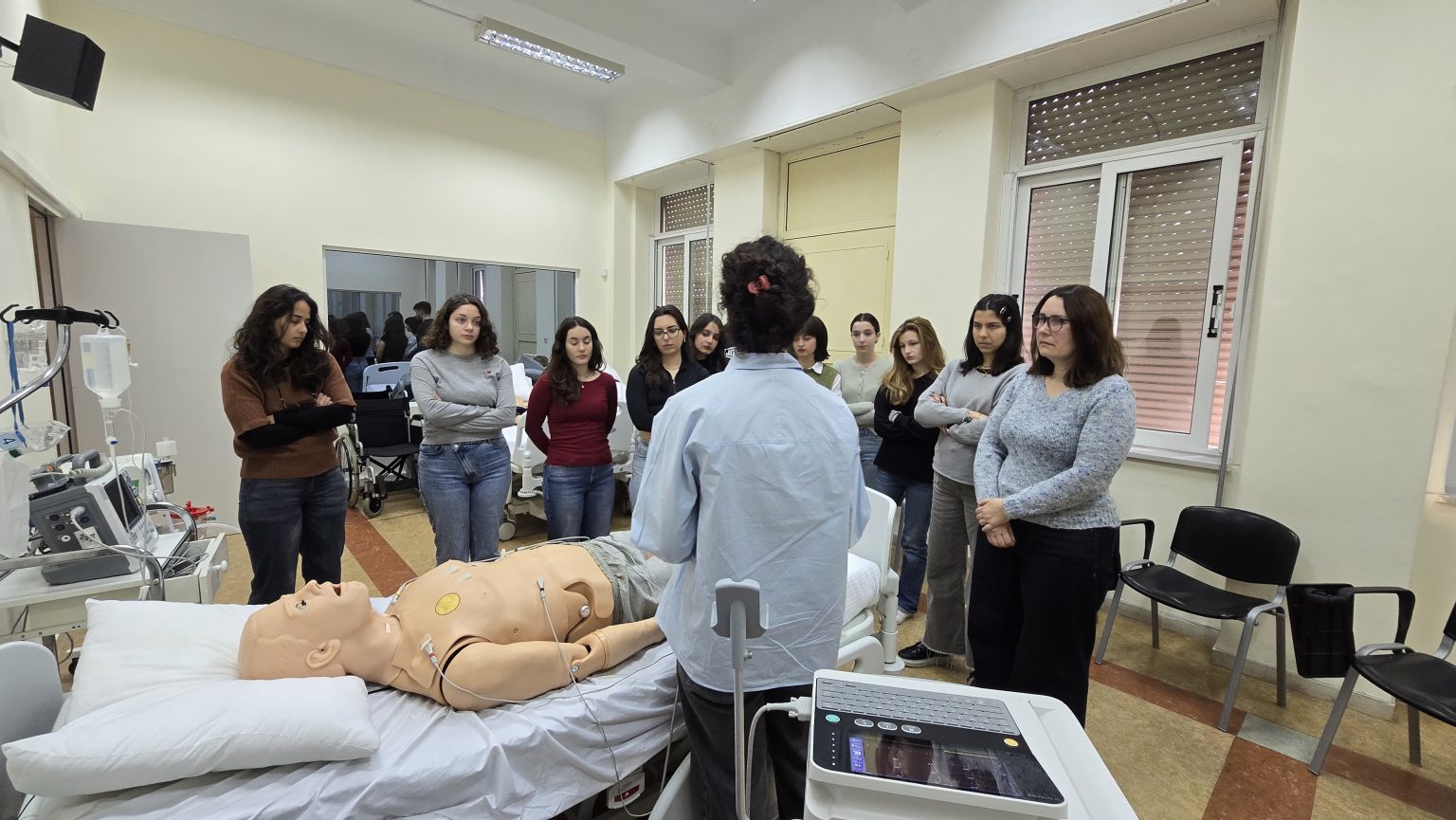
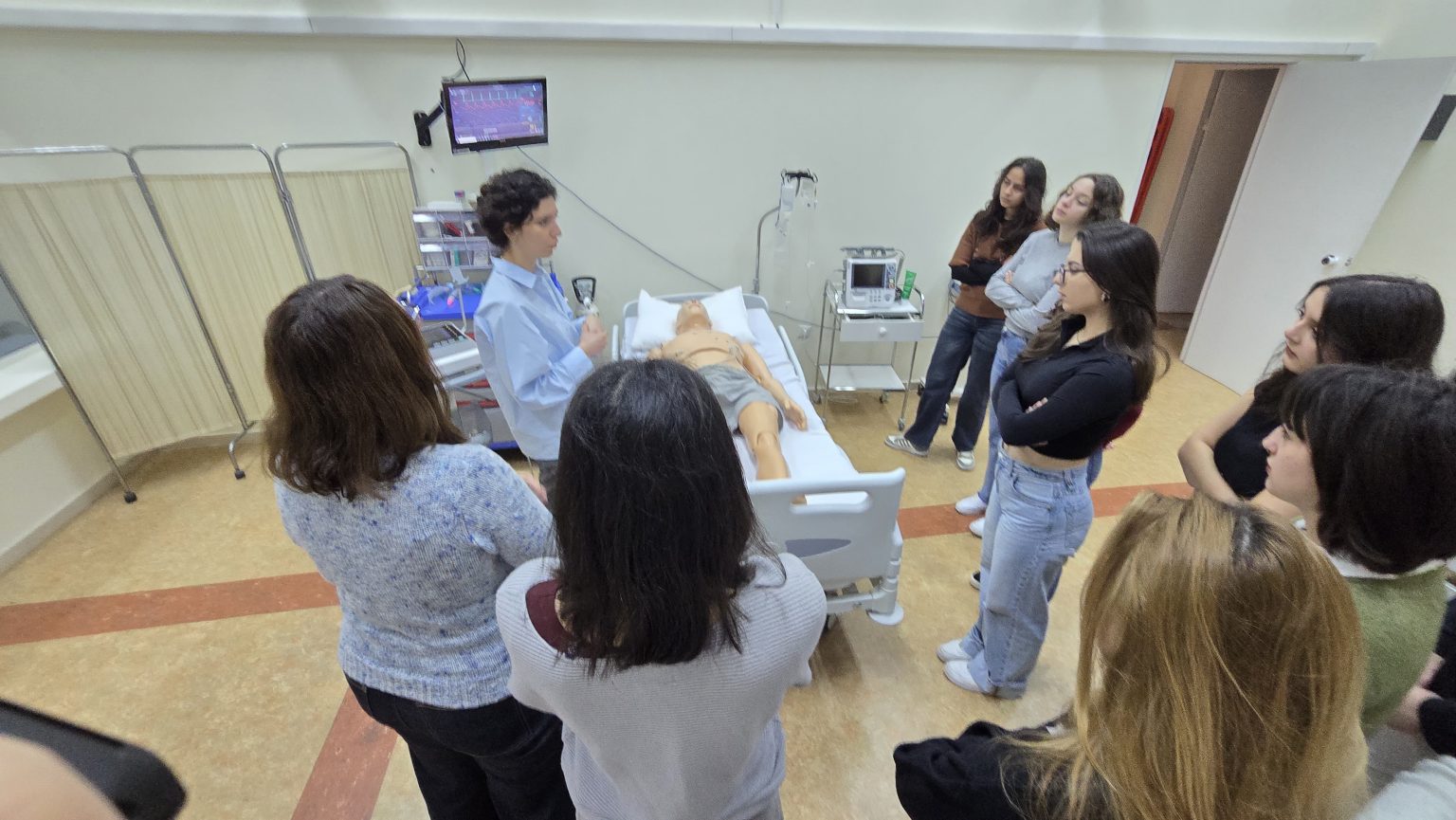
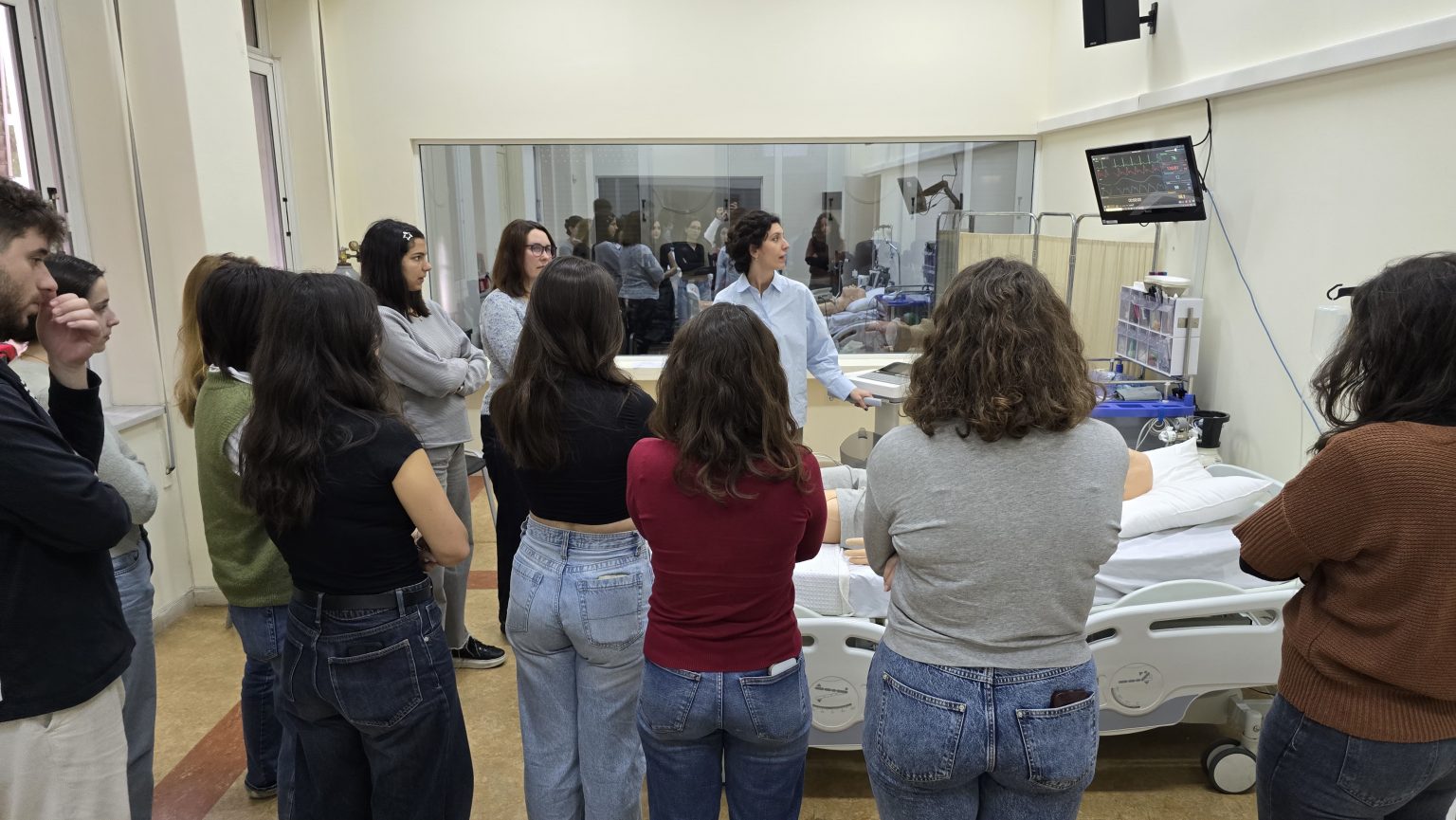
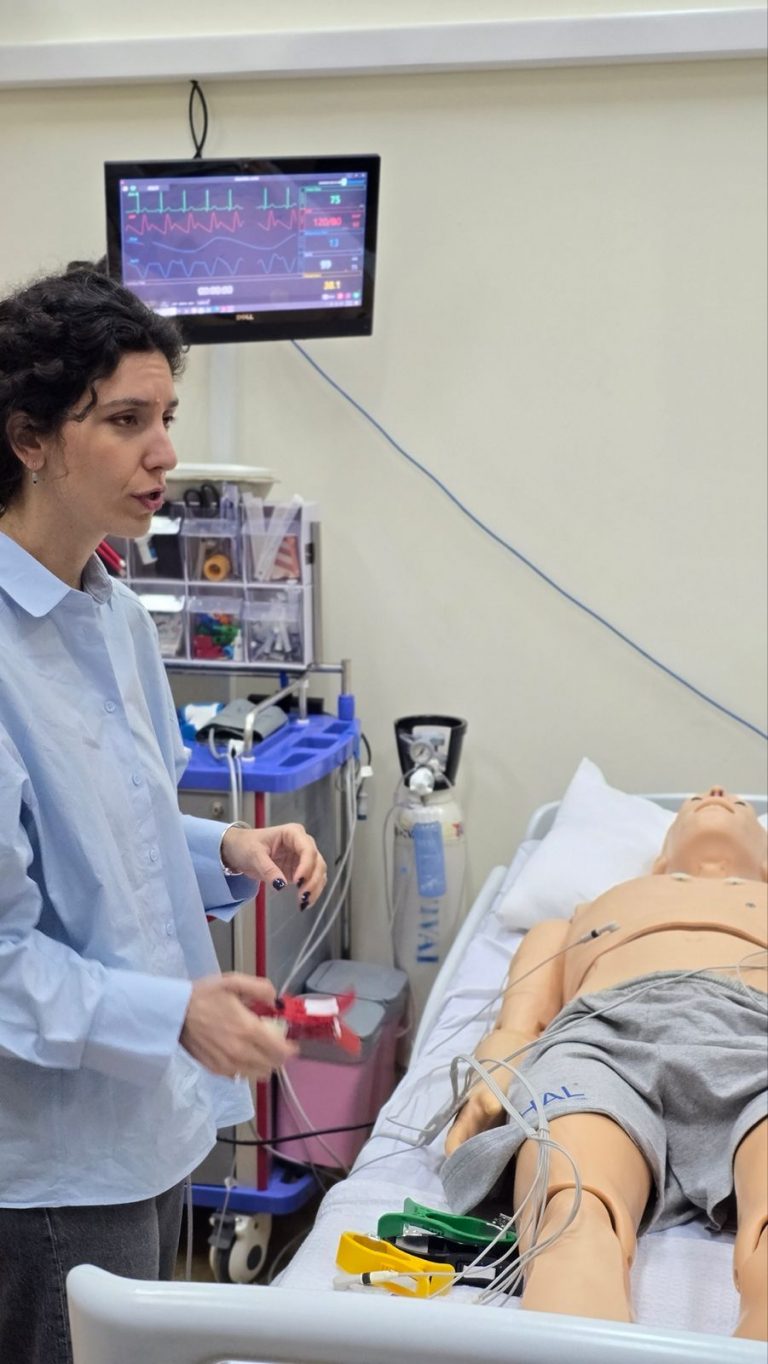
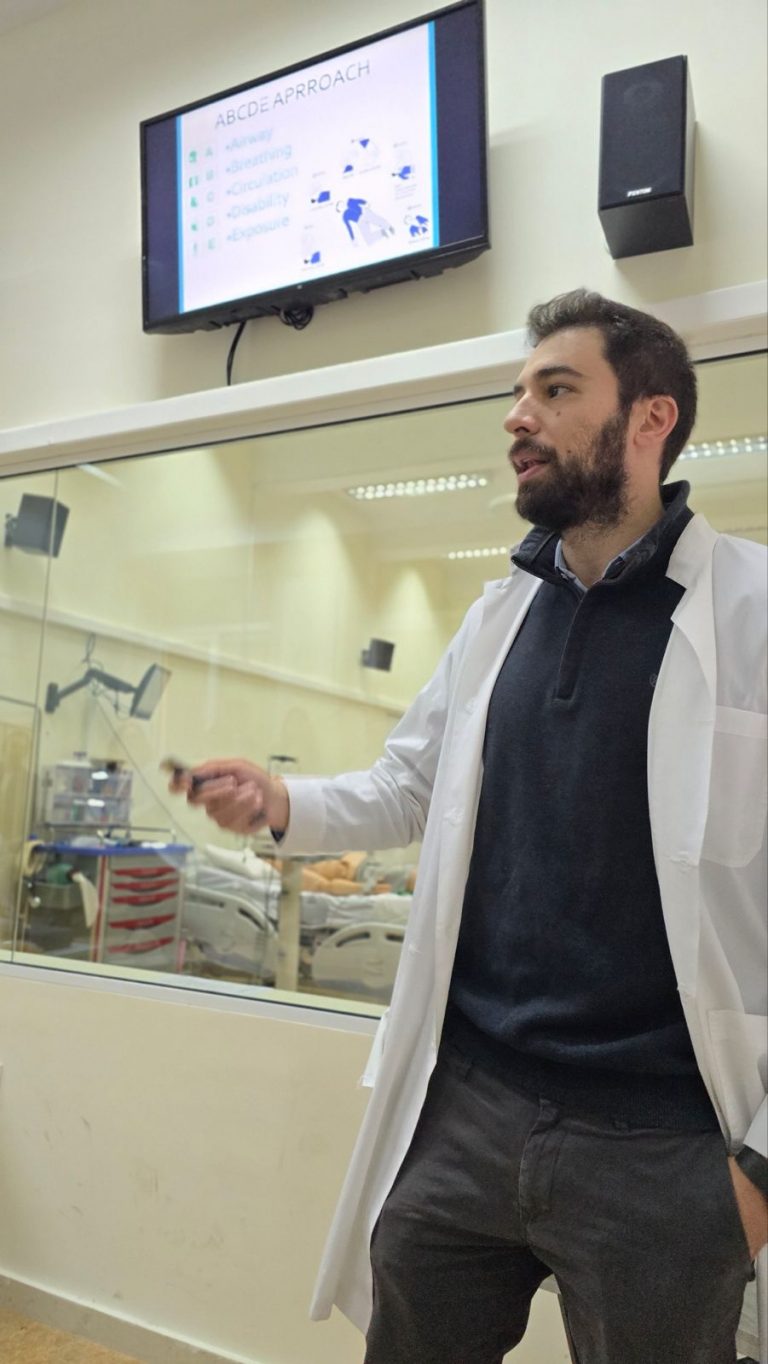
On 9 February 2026, the University of Athens School of Medicine reached a historic milestone with the launch of its Clinical Simulation Programme, held at the Physiology Laboratory’s Simulation Centre.
Part of the Internal Medicine clinical practice curriculum, the programme brings together all eight Departments of Internal Medicine at the School—including the Department of Therapeutics, the 1st through 4th Departments of Internal Medicine, the 1st and 2nd Departments of Propedeutic Internal Medicine, and the Department of Pathophysiology. It seeks to familiarise students with the common and critical challenges encountered in everyday clinical practice, within a safe, controlled, and pedagogically structured environment.
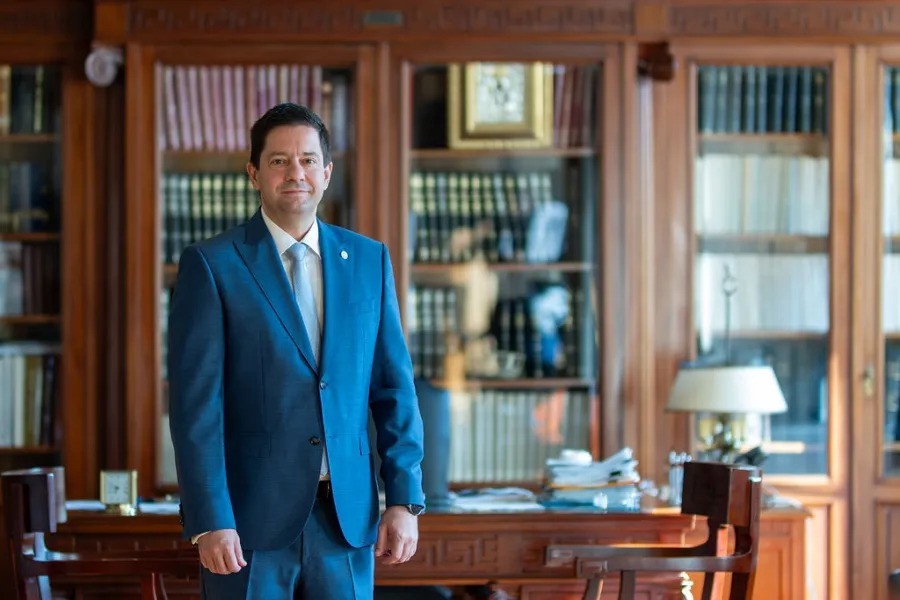
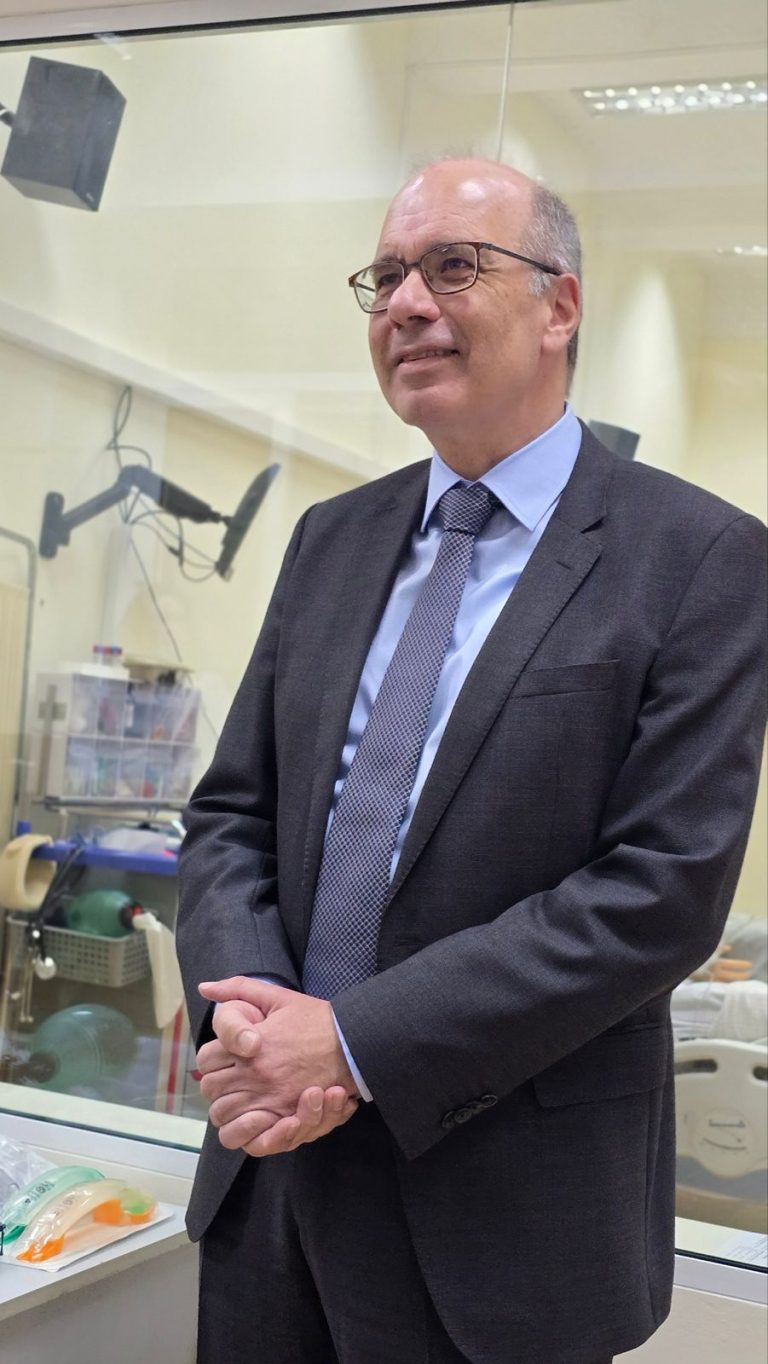
Welcoming the first group of students, Professor Nikolaos Arkadopoulos, Chair of the School of Medicine, stressed that this initiative marks a significant first for the School.
Initially aimed at students in their 10th semester, the programme will expand to include those in the 11th and 12th semesters during the next academic year.
Simulation scenarios developed within the laboratory cover basic and urgent clinical conditions, including shortness of breath and acute chest pain, acute abdominal pain, severe headache and disorders of consciousness, as well as cardiac arrhythmias and shock.
Through realistic cases, students are encouraged to develop their clinical reasoning skills, make judgements, and collaborate effectively as a team.
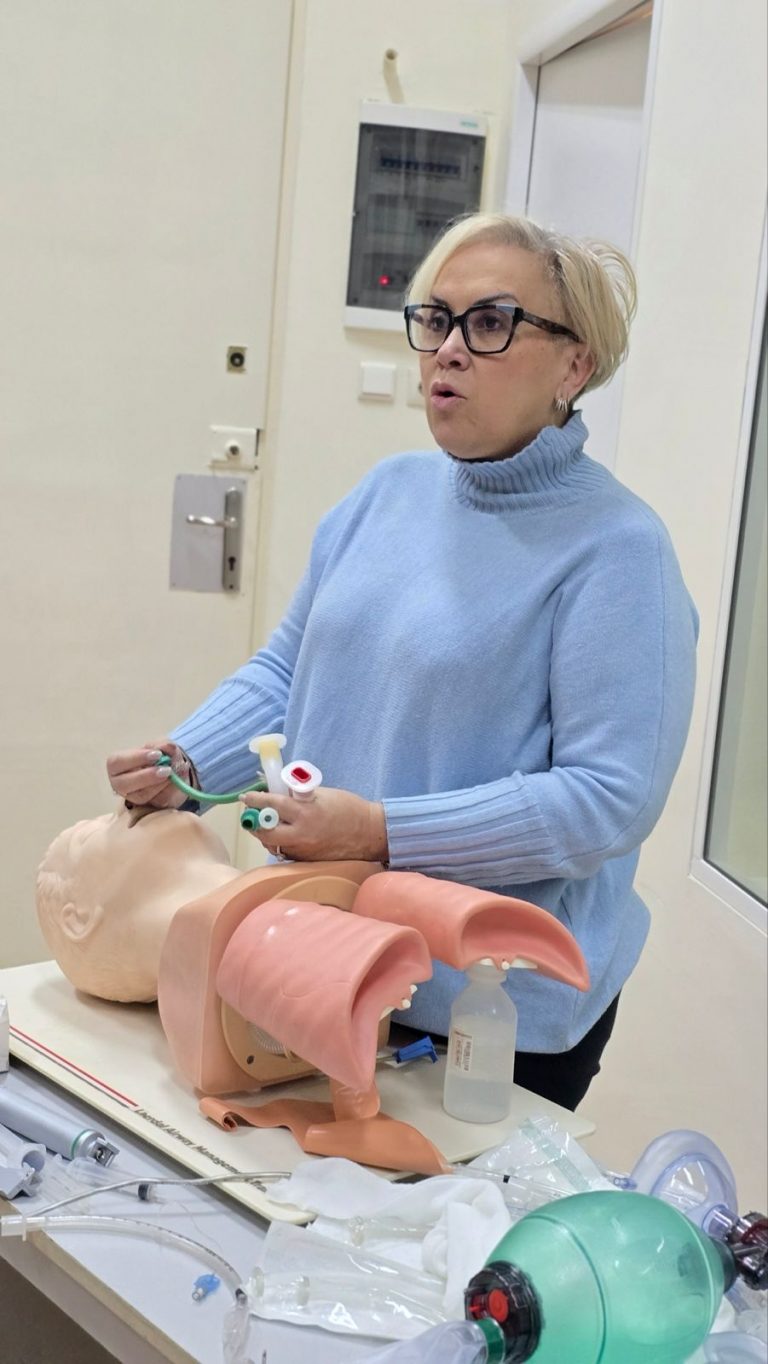
Scientific oversight of the programme lies with Professor Kleio Mavragani, Director of the Physiology Laboratory, with essential administrative and technical support from Polyxeni Gaitanari and Valia Xarchakou.
The School gratefully acknowledges the contribution of Associate Professor Aggelogianni, as well as that of the programme’s instructors—Loukas Chatzis, Aimilios Kaklamanos, Spiros Karageorgos, Panagiota Palla, Vasiliki Dimitropoulou, Petros Kanellakis, Victoria Polydorou—and of all instructors from the participating Departments of Internal Medicine, whose collaboration is essential to the programme’s successful implementation.
![Complete Anatomy Training Session [October 7, 2026]](https://hub.uoa.gr/en/wp-content/uploads/2026/10/NKUA_Invite-for-Complete-Anatomy-Training-Session_page-0001-1-1024x604.jpg)
![‘Dialogues for Athens’ Conference Organised by TO VIMA Under the Auspices of the National and Kapodistrian University of Athens and the Municipality of Athens [6-7 October]](https://hub.uoa.gr/en/wp-content/uploads/2026/10/Untitled-Design2-1-1024x576-1.jpg)